
Porto food in short
- Porto’s kitchen is built on pork, salt cod, beans and bread, not on the seafood-and-sunshine cooking most people expect from Portugal.
- The four dishes to eat first are francesinha, tripas à moda do Porto, a bifana and a pastel de nata.
- Lunch is the serious meal here. Most tascas serve a prato do dia between noon and three, and it is the best value in the city.
- Every dish here has a full recipe on the site, and we teach several of them in our kitchen after a morning at the market.
Porto eats differently from Lisbon and differently again from the Algarve. This is a northern city with a cold Atlantic on one side and the Douro valley behind it, and the food follows that geography: slow-cooked pork, beans, cabbage, salt cod soaked back to life, and bread in almost everything. Portions are generous to the point of comedy, wine arrives in jugs, and the best meal of the day is lunch. If you want a single dish to start with, make it the francesinha, and if you want the dish that explains the city’s nickname, it has to be tripas à moda do Porto.
We run a cooking school here, so we spend most mornings at Mercado do Bolhão buying the same things our neighbours buy, and most afternoons teaching visitors to cook them. The dishes we serve and teach are the ones worth your appetite: what each tastes like, where to find a good version in the city, and how to make it at home once you are back.
What Makes Porto Food Different From the Rest of Portugal
Northern Portuguese cooking grew out of a region that was never rich. The dishes that survived are the ones that stretched cheap ingredients a long way: offal, pork shoulder, dried beans, kale, broa cornbread and bacalhau that arrived salted from the North Atlantic. None of it was designed to be elegant. It was designed to feed people who worked outside, and it still arrives in quantities that assume you have done a day’s labour beforehand.
The people of Porto are nicknamed tripeiros, tripe eaters, and they use the word with pride. The story goes back to the fifteenth century, when the city gave its meat to the ships sailing for Ceuta and kept the offal for itself. Whether or not the history is exact, the identity stuck, and it shapes how the city thinks about its own cooking: honest, unfussy, and suspicious of anything too refined.
What this means in practice is that the best Porto food is rarely in the prettiest room. A tiled tasca with paper tablecloths and a handwritten board will usually feed you better than a restaurant with a terrace and a menu in five languages. Follow the lunch crowd rather than the view.
The Traditional Porto Food You Should Try First
A first visit does not need to cover everything. These are the dishes that tell you most about the city, roughly in the order we would send someone to eat them, with a sense of what each one costs in an ordinary neighbourhood restaurant rather than a tourist-facing one.
| Dish | What it is | When to eat it |
|---|---|---|
| Francesinha | Layered meat sandwich under melted cheese and a beer-and-tomato sauce | Late lunch, and then nothing else that day |
| Tripas à moda do Porto | Tripe, white beans, chouriço and cured meats, slow-cooked | Lunch, traditionally a Thursday |
| Bifana | Thin marinated pork in a crusty papo seco roll | Any time, standing at the counter |
| Bacalhau à Gomes de Sá | Salt cod baked with potato, onion, egg and olives | Lunch or dinner, year round |
| Caldo verde | Potato broth with finely shredded kale and a slice of chouriço | Starter, or supper on a cold night |
| Cozido à portuguesa | Boiled meats, sausages and winter vegetables on one platter | Sunday lunch, shared |
| Pastel de nata | Custard tart with a blistered top and laminated pastry | Mid-morning with a bica |
| Petiscos | Small plates: presunto, cheese, fritters, pickled sardines | Early evening with a glass of vinho verde |
A longer list of the classics, with more on regional variations, sits in our guide to the top traditional foods to eat in Porto.
Francesinha: The Most Famous Food In Porto
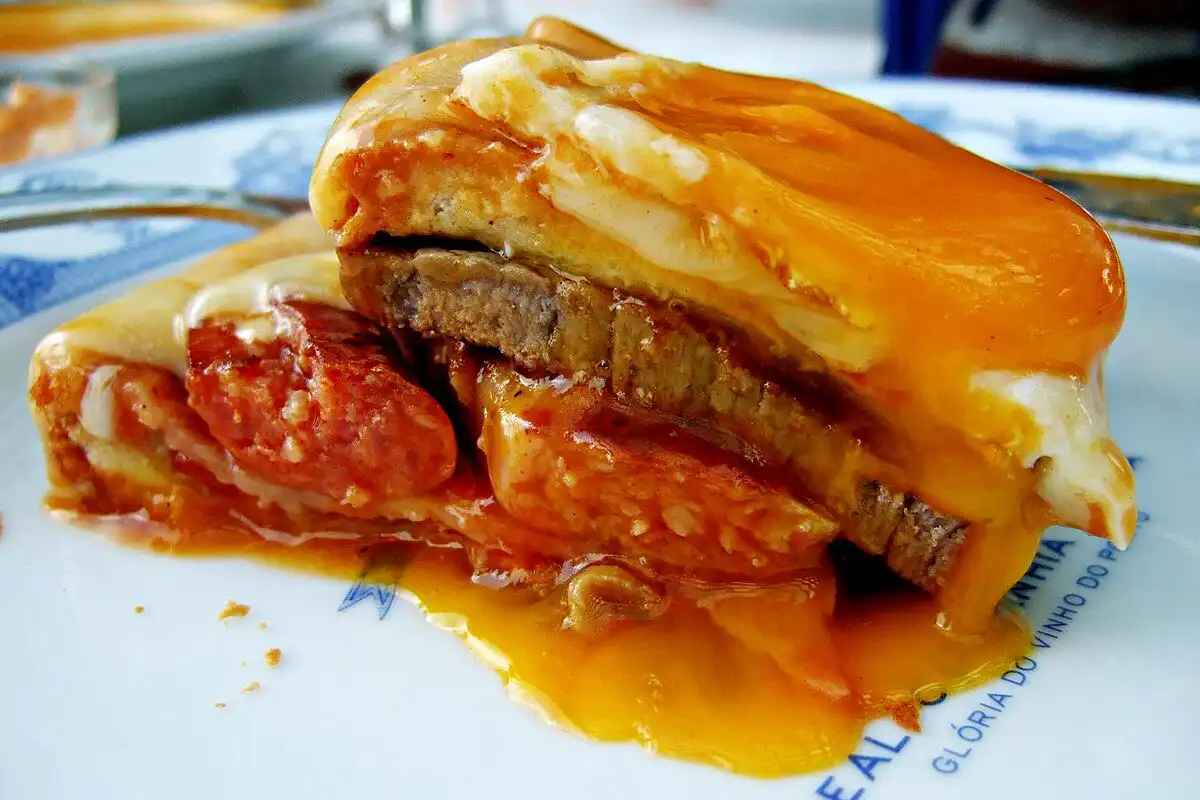
The francesinha is a sandwich only in the sense that bread is involved. Inside are layers of steak, fresh sausage, smoked sausage and ham; over the top goes a blanket of melted cheese; and over all of it comes a hot sauce built from tomato, beer and stock, thickened until it coats everything. It usually arrives sitting in a shallow pool of that sauce with chips around the edge and, if you ask for it, a fried egg on top.
It was invented in the 1950s by a returning emigrant who wanted to recreate the croque-monsieur he had eaten in France, adapted for a city that thought the French version was underpowered. Every restaurant guards its sauce recipe, and locals will argue about the best one with real heat. The sauce is what separates a good francesinha from a bad one: it should be glossy and slightly sharp, not floury or sweet.
One is a full meal for two moderate appetites. If you want to know which places locals actually rate, we keep a running list of where to eat the best francesinha in Porto, and the full francesinha recipe including the sauce is on the site too.
Tripas à Moda Do Porto: The Porto Food Behind The City’s Name
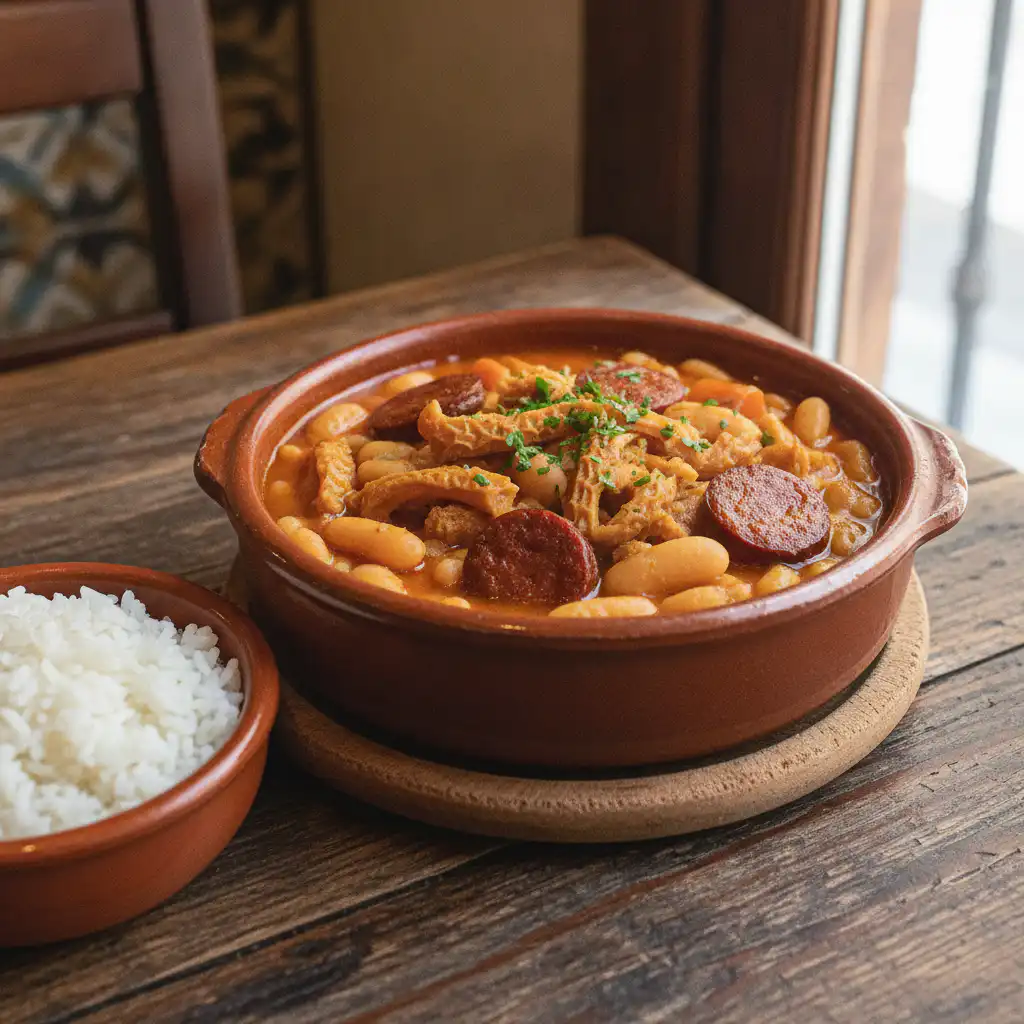
Tripe frightens people who have never eaten it well prepared. Done properly, and in Porto it usually is, the tripe is soft rather than rubbery and carries the flavour of everything cooked alongside it: white beans, carrot, chouriço, presunto, sometimes a piece of veal or chicken. It is served with plain white rice to soak up the sauce, and the whole thing tastes more of smoked pork and bay than of offal.
Thursday is the traditional day for it, and plenty of tascas still run it as the Thursday prato do dia. Ordering it in a city that named itself after the dish earns you a certain amount of goodwill from the kitchen. If you are undecided, ask for a half portion, which most places will happily serve.
It is also one of the more forgiving dishes to make at home once you understand the order of operations, and our tripas à moda do Porto recipe walks through cleaning, blanching and the long simmer.
Bifana: The Best Cheap Food In Porto
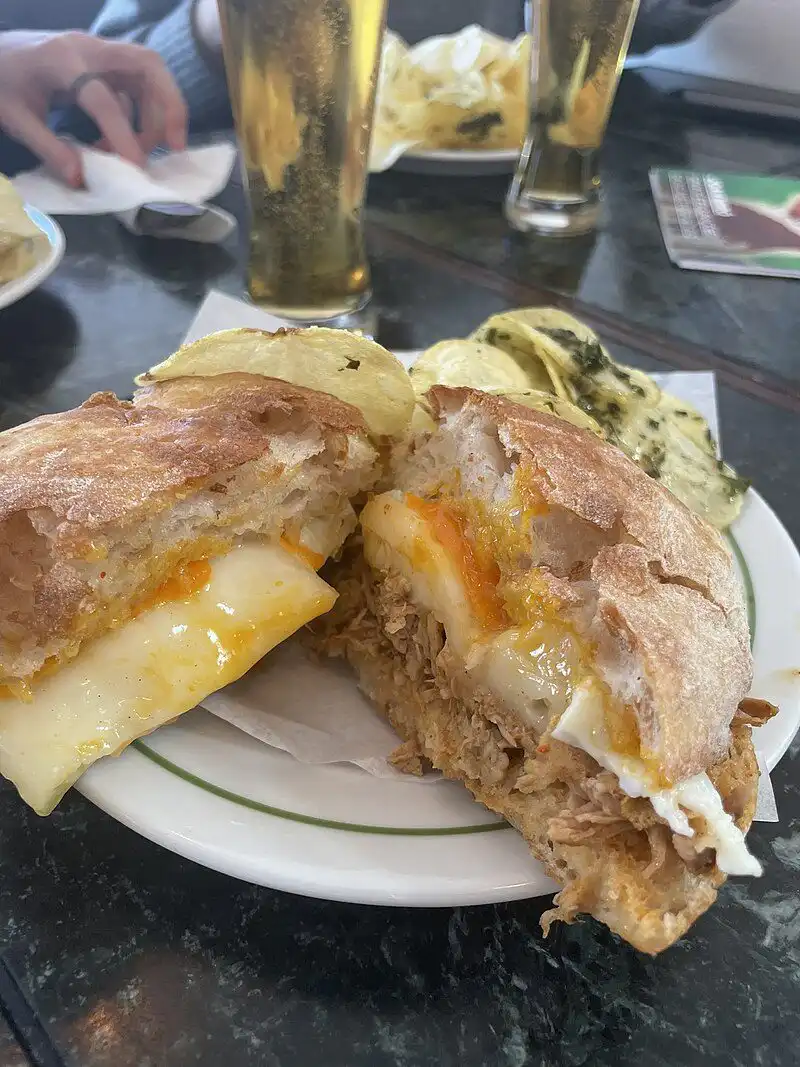
A bifana is thin slices of pork, marinated in white wine, garlic and bay, cooked fast and piled into a crusty papo seco roll with a spoonful of the cooking juices poured over. That is the whole thing. It costs a fraction of a restaurant meal, it takes about four minutes to eat standing at a counter, and it is the single best piece of value in the city.
The northern version tends to be simpler than the one you find further south, which sometimes arrives with mustard and piri-piri. In Porto the pork and the marinade do the work. A good bifana has enough juice soaking into the bottom of the roll that you need to eat it leaning forward.
Cafés serve them all day, which makes them the obvious answer to arriving hungry at an odd hour. Our guide to what a bifana is and where to eat one in Porto covers the marinade and the places we send people.
Caldo Verde And Cozido: Porto Comfort Food
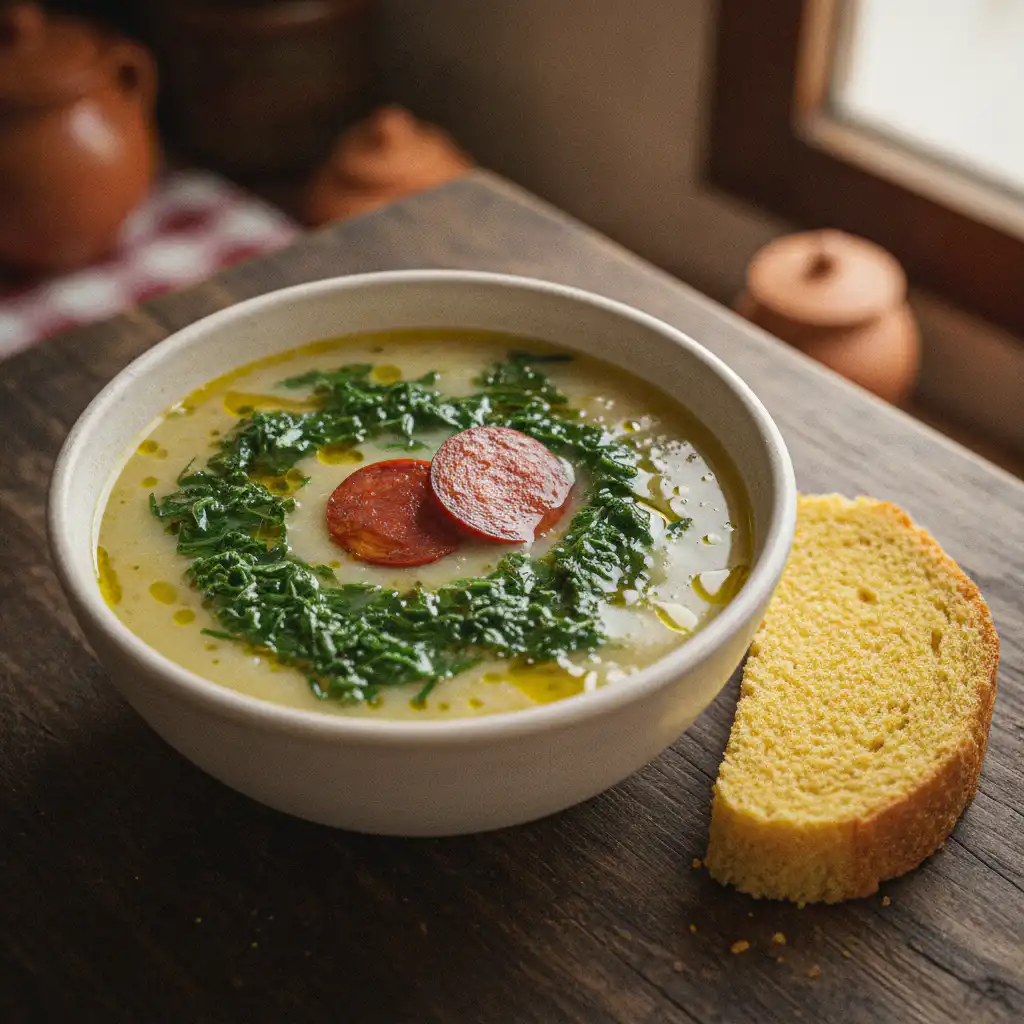
Caldo verde is the soup every Portuguese household can make. A base of potato and onion is blended smooth, then kale sliced as finely as tobacco is dropped in at the last moment so it stays bright and slightly firm. A slice of chouriço goes on top, a thread of olive oil over that, and it is eaten with broa, the dense cornbread of the north. It appears at weddings, at festivals, and at eleven at night when there is nothing else in the house.
The texture is the whole trick. The potato base should be velvety without cream, and the kale should be cut thin enough to look like green threads rather than leaves. Our caldo verde recipe covers both, including how to get the cut right without a mandoline.
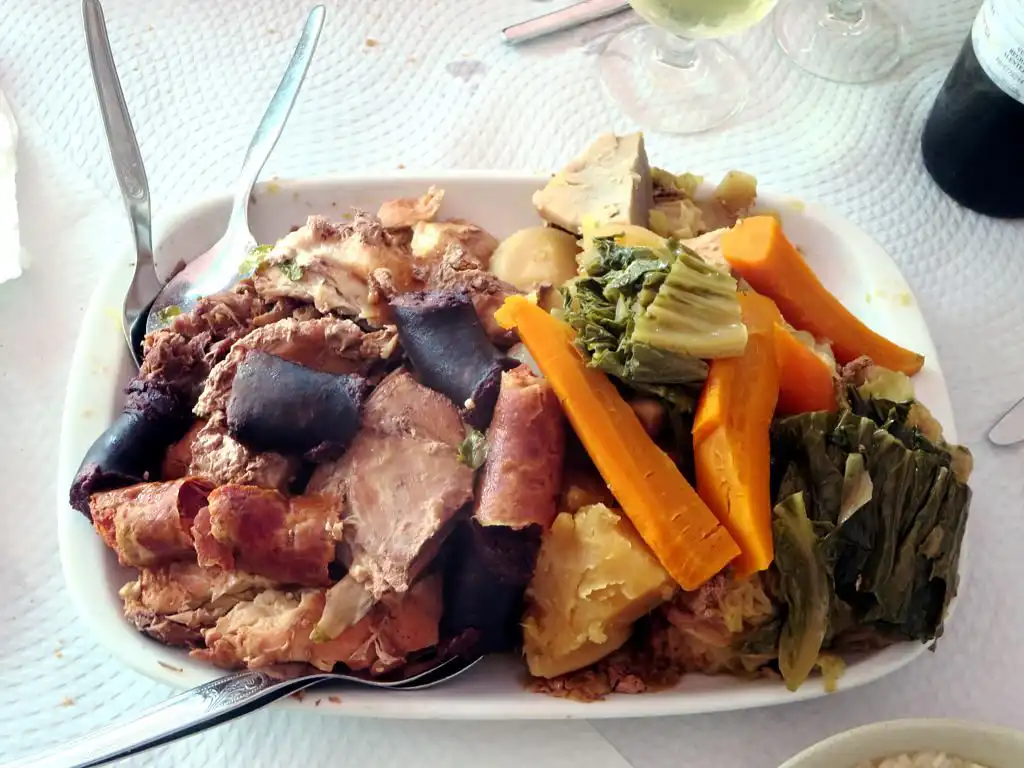
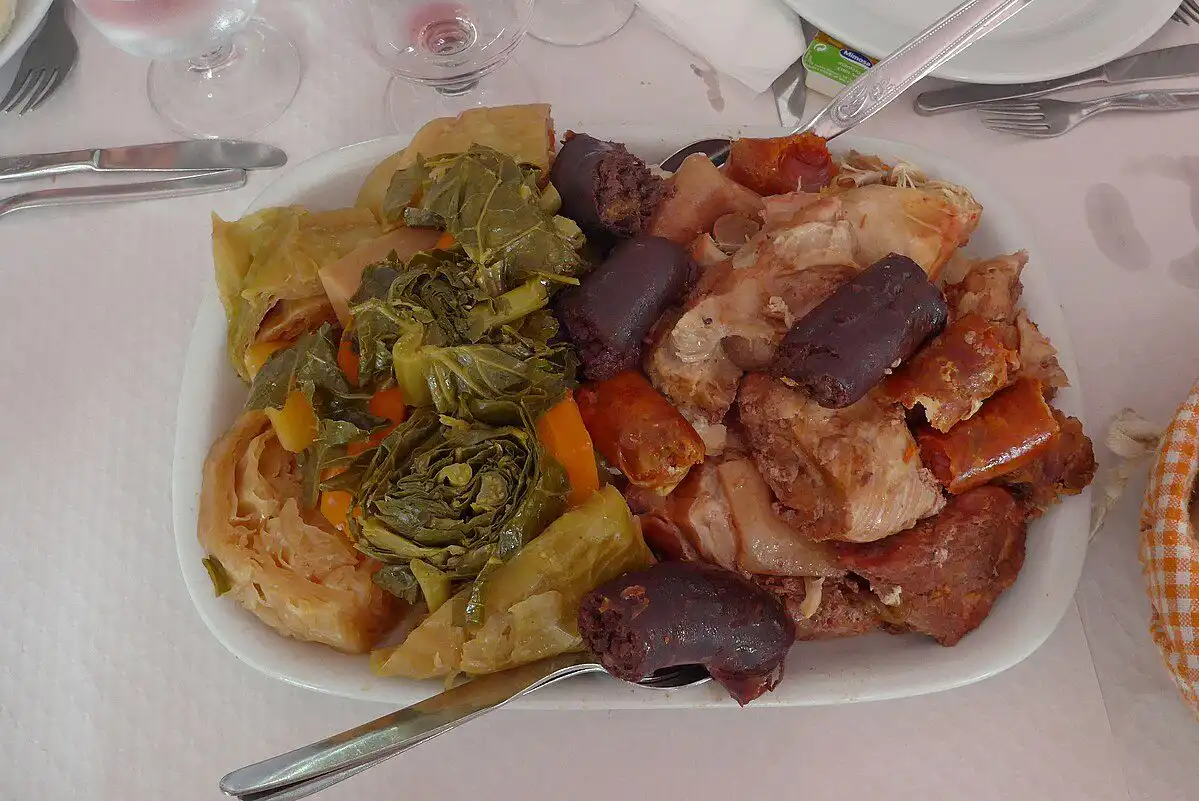
Cozido à portuguesa is the Sunday version of the same instinct. Beef, pork, chicken, several sausages including black pudding, and whatever vegetables are in season are boiled together and served on a vast platter with rice and the broth alongside. It is a dish for a table of people rather than for one, and ordering it alone tends to produce a look of concern from the waiter.
Rancho à portuguesa is its close cousin, built on chickpeas and pasta with pork and chouriço, and slightly more manageable in scale. Both are in our recipe collection: the cozido à portuguesa recipe and the rancho à portuguesa recipe.
Bacalhau: The Salt Cod At The Centre Of Porto Food
Portugal is said to have a different bacalhau recipe for every day of the year, and the country eats more salt cod than anywhere despite the fish never having swum in Portuguese waters. It came from the North Atlantic, salted and dried on board, and the preserving method became a cuisine in its own right. The cod has to be soaked for a day or more, with several changes of water, before it can be cooked at all.
The Porto version to know is Bacalhau à Gomes de Sá, named after a nineteenth-century merchant from the city. Flaked cod is layered with sliced potato and onion softened in plenty of olive oil, baked, then finished with quartered hard-boiled egg and black olives. It is rich without being heavy, and it is on almost every traditional menu in the city.
Getting the soak right is what separates a good version from a salty one, and our bacalhau à Gomes de Sá recipe sets out the timings. Pickled sardines are the other preserved-fish classic worth knowing, and the sardinha de escabeche recipe is a good introduction.
Petiscos: Portuguese Tapas And Small-Plate Porto Food
Petiscos are Portugal’s answer to tapas, though nobody here would thank you for the comparison. They are the small plates that appear with drinks in the early evening: presunto sliced thin, a wedge of Serra da Estrela cheese soft enough to spoon, salt cod fritters, sautéed garlic prawns, chouriço grilled at the table over aguardente. Ordering four or five between two people is a perfectly respectable dinner.
This is the easiest part of northern Portuguese cooking to recreate at home, because most of it is assembly rather than technique. A good board, decent bread, one hot dish and a bottle of vinho verde gets you most of the way there. Our five Portuguese tapas recipes are the ones we teach most often, chosen because they work in a home kitchen without special equipment.
Pastel De Nata And Sweet Porto Food
The pastel de nata is a custard tart in laminated pastry, baked hot enough that the top blisters into dark spots. A proper one is still slightly warm, the pastry shatters when you bite it, and the custard is set but loose at the centre. Dusting it with cinnamon is optional and faintly contentious. Eat it standing at the counter with a bica, Porto’s small strong coffee.
Beyond the nata, northern pastry shops run to things most visitors never try: jesuítas in crisp glazed triangles, bolas de Berlim filled with egg cream, and the almond and egg-yolk sweets that came out of convent kitchens. The bakeries are also where you find broa and the dense rye breads that belong with soup rather than with jam.
The pastel de nata recipe on the site explains the lamination and the oven temperature, which is the part most home versions get wrong. For the shops themselves, we keep a guide to the best bakeries in Porto.
Where To Eat Traditional Food In Porto
Porto rewards a bit of walking. The places that feed locals are rarely the ones on the main squares, and the difference in both price and quality is significant. These are the categories worth understanding before you choose anywhere.
- Tascas — small family-run restaurants, often tiled, usually with a handwritten prato do dia. Lunch here is the best value in the city and the food is what the family is eating.
- Markets — Mercado do Bolhão for produce, fish, cheese and cured meat, plus counters where you can eat on the spot. Mornings are when it is actually working rather than performing.
- Cervejarias — beer halls that take seafood seriously. Percebes, prawns, crab and cold beer, usually with paper on the table.
- Pastelarias — the café-bakeries that open early and serve pastries, coffee, and often a bifana or a toasted sandwich all day.
- Casas de pasto — canteen-style dining rooms serving one or two dishes at lunch to whoever turns up. No menu, no English, excellent food.
Two habits will improve almost any meal here. Eat lunch as your main meal, because that is when kitchens cook their best dishes and charge the least for them. And accept the couvert of bread, olives and cheese if it looks good, but send it back without embarrassment if you do not want it, because you are charged for what you keep.
How To Cook Porto Food Yourself
Most of these dishes were built for home kitchens, which is why they travel well. None of them needs unusual equipment, and the shopping list for a Porto meal is short: good olive oil, bay leaves, sweet paprika, garlic, dried white beans or chickpeas, chouriço, and salt cod if you can find it. The technique that matters most is patience, because almost everything here improves with a longer, lower simmer than you think it needs.
Step 1 — Start with a sauce or a broth. Francesinha sauce, the base for tripas, and the potato base for caldo verde are all things you can make ahead and keep. Get one of them right and the dish built on top of it becomes straightforward.
Step 2 — Buy the pork properly. Chouriço and presunto do most of the seasoning in northern cooking, so a supermarket substitute will change the result more than any other swap. A Portuguese or Spanish deli is worth the detour.
Step 3 — Cook one dish repeatedly. These recipes reward repetition rather than variety. Make caldo verde four times and you will understand the potato-to-water ratio in a way no written recipe conveys.
The fastest way to shortcut all of that is to cook the dishes once with someone who makes them every week. Our class starts at Mercado do Bolhão, where we buy the ingredients together and you learn what a good chouriço smells like and how to tell fresh kale from tired kale. Then we cook at Canto de Luz, and you eat what you have made, with wine, at a table with everyone else on the course.
Cook Porto food with us
A chef-led market tour at Bolhão followed by a hands-on Portuguese cooking class and lunch with wine. Four hours, small groups, ages 14 and up, from €119 per person.
“What really made this special was getting to cook everything ourselves. Rather than just watching a demonstration, we were right there in the kitchen, guided through each step by Claudia and Priscila, getting our hands dirty (in the best way!), and actually making the dishes from scratch. There’s something so satisfying about tasting something you’ve just prepared yourself.”
Shannon Tokarz
Porto Food Questions Answered
What Food Is Porto Known For?
Porto is known for francesinha, a layered meat sandwich under melted cheese and a beer-based sauce, and for tripas à moda do Porto, the tripe and white bean stew that gave the city’s residents their nickname. Bifanas, bacalhau dishes, caldo verde and pastéis de nata are the other staples you will find almost everywhere.
What Is The Most Traditional Food In Porto?
Tripas à moda do Porto is the most traditionally Porto dish, cooked with tripe, white beans, chouriço and cured meats and served with white rice. It is tied to the city’s identity as tripeiros, and many tascas still serve it as the Thursday dish of the day.
How Much Does A Meal Cost In Porto?
A prato do dia at a neighbourhood tasca is the cheapest proper meal, usually including soup and sometimes wine. A bifana at a café counter costs very little and is a full snack. Restaurants aimed at visitors in the Ribeira charge considerably more for the same dishes, so walking a few streets inland makes a real difference.
Is Porto Food Good For Vegetarians?
Traditional northern cooking is built around pork and salt cod, so classic menus are difficult. Caldo verde is often made with a meat broth, so it is worth asking. Markets, petiscos bars and the newer restaurants around Cedofeita and Bonfim handle vegetarian eating far better than a traditional tasca will.
When Do People Eat In Porto?
Lunch runs from about midday to three and is the main meal of the day. Dinner starts late by northern European standards, with kitchens busiest from eight onwards. Many tascas close on Sundays, and some shut for the whole of August.
Can You Learn To Cook Portuguese Food In Porto?
Yes. Our class combines a chef-led tour of Mercado do Bolhão with a hands-on cooking session and lunch with wine, running four hours in small groups for ages 14 and up. Every recipe on this site is also written for a home kitchen, so you can work through the dishes before or after you visit.
Bringing Porto Food Home
The pleasure of eating here is that nothing is trying very hard to impress you. A bifana handed over a counter, a bowl of caldo verde with good bread, a platter of tripe on a Thursday: these are dishes with no ambition beyond feeding you properly, and that is exactly why they are worth learning. Cook two or three of them at home and the city stays with you long after the trip.
Every dish above links through to a full recipe with quantities, timings and the details that usually go missing. Work through them in whatever order appeals, or come and cook them with us at the market first and take the techniques home afterwards.