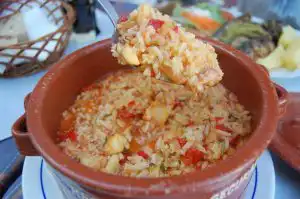

Few dishes capture the essence of Portugal quite like Cozido à Portuguesa. This hearty stew brings together tender cuts of pork, beef, and traditional smoked sausages simmered with a mix of seasonal vegetables such as cabbage, carrots, potatoes, and turnips. More than just a meal, Cozido represents centuries of family tradition and communal dining, often enjoyed as a centerpiece for Sunday gatherings or special occasions. It’s a comforting symbol of Portuguese culture that invites people to slow down, share stories, and savor simple, nourishing flavors.
For those interested in exploring Portugal’s culinary scene further, especially in the vibrant city of Porto, the guide on Best Places to Eat and Drink in Porto offers excellent recommendations. While Cozido might not be Porto’s signature dish, the city’s rich food culture provides plenty of opportunities to taste authentic Portuguese flavors alongside regional specialties. This guide is a great resource for anyone wanting to dive deeper into Portugal’s diverse gastronomy while experiencing the warm hospitality of its people.
What is Cozido à Portuguesa? Origins and History
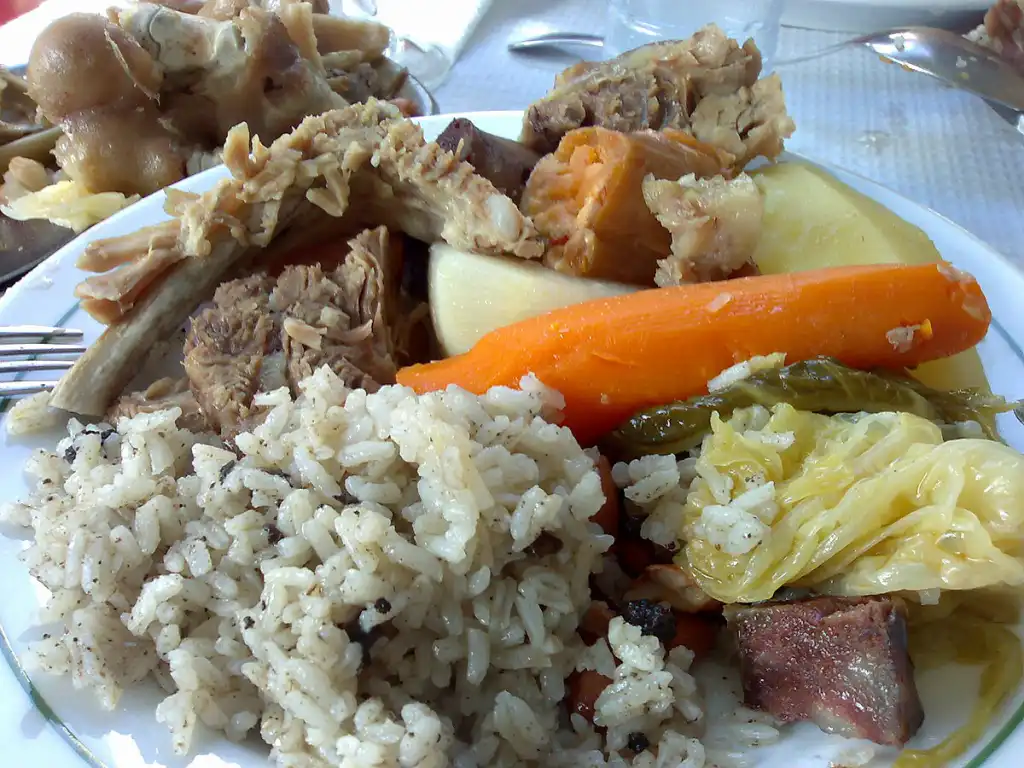
Cozido à Portuguesa is a traditional Portuguese stew that embodies the country’s rich rural culinary heritage. At its heart, it’s a slow-cooked one-pot meal combining a variety of meats—such as pork, beef, chicken, and smoked sausages—with an assortment of seasonal vegetables like cabbage, carrots, potatoes, and turnips. This dish is typically served family-style, often during weekends or special occasions, fostering a sense of community as everyone shares from the same pot.
The dish has deep roots in Portugal’s agrarian past. It originated as a practical, resourceful meal among peasant families who used whatever ingredients were available—be it leftover meats or fresh garden produce. The slow-simmering method tenderizes tougher cuts and blends the flavors, turning simple components into a hearty feast. Over time, Cozido evolved into a celebrated national dish, representing Portugal’s resourceful and communal approach to cooking.
Key Characteristics of Cozido à Portuguesa:
- Rustic origins: Born from peasant cooking, designed to use all available meats and vegetables efficiently.
- Variety of ingredients: Typically includes pork, beef, chicken, smoked sausages, cabbage, carrots, potatoes, turnips, and sometimes beans or rice.
- Slow cooking: Simmered gently to tenderize meats and infuse flavors throughout the stew.
- Family-style serving: Traditionally shared communally, often during weekends or festive gatherings.
Historical and Regional Evolution:
- Cozido’s roots trace back centuries, evolving from early rural cooking methods using open hearths or wood-fired ovens.
- The dish adapted to different regions based on local ingredient availability:
- Northern Portugal: Known for smoked sausages like chouriço and farinheira, which add smoky, spicy notes.
- Southern Portugal: Incorporates more fresh greens and beans, reflecting Mediterranean influences.
- Azores: Adds local sausages and occasionally fresh fish, showing island variations.
- Northern Portugal: Known for smoked sausages like chouriço and farinheira, which add smoky, spicy notes.
- Originally a frugal dish to feed many, Cozido has become a national symbol of Portuguese culinary tradition and hospitality.
In essence, Cozido à Portuguesa is more than just a stew—it’s a story on a plate, representing generations of Portuguese families’ ingenuity and celebration of community through food.
Cozido Ingredients Explained
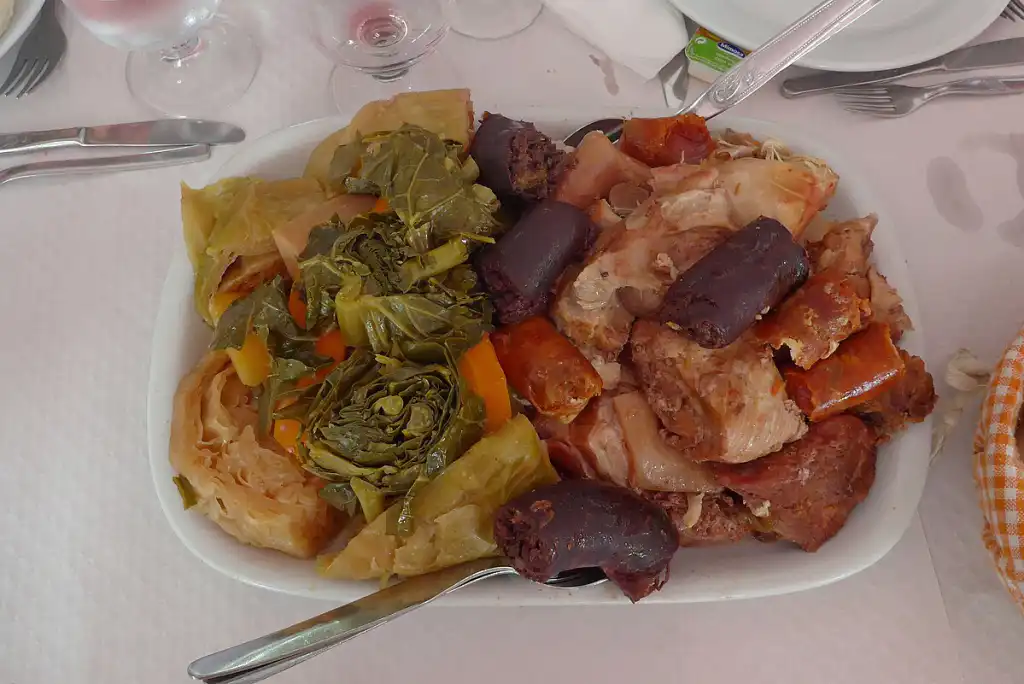
Cozido à Portuguesa is celebrated for its diverse and hearty ingredients, each playing a key role in crafting the dish’s deep, comforting flavors. From rich meats to fresh vegetables, understanding these elements helps home cooks recreate this classic stew with authenticity.
1. Proteins
The stew traditionally combines several types of meat, offering a complex, layered taste:
- Pork belly and ribs: These cuts provide richness and tenderness as the fat slowly melts.
- Pork trotters: Their gelatinous texture naturally thickens the stew.
- Chicken: Often bone-in for added flavor and lighter protein balance.
- Beef shank: Slow cooking transforms this tough cut into succulent, flavorful bites.
- Chouriço: The smoky, paprika-spiced sausage is essential for authentic Portuguese taste.
- Morcela: Blood sausage that adds earthy depth.
- Farinheira: A sweet, soft sausage that balances saltier meats.
2. Vegetables
Vegetables add freshness and texture to Cozido:
- Cabbage: Mildly sweet and perfect for soaking up the stew’s rich broth.
- Potatoes: Creamy when cooked, absorbing the savory flavors.
- Carrots: Sweetness and vibrant color.
- Turnips: Slightly peppery, adding complexity.
- Collard greens (couve galega): A traditional Portuguese green with a slight bitterness that balances the richness.
3. Extras and Seasonal Variations
Depending on availability, some cooks add:
- Rice or beans: Served alongside or incorporated into the stew.
- Seasonal veggies, Such as pumpkin or kale, reflect the flexibility of the dish.
4. Ingredient Substitutions for International Cooks
For those outside Portugal, ingredient swaps include:
- Smoked sausages like kielbasa or andouille for chouriço and morcela.
- Kale or Swiss chard for collard greens.
- Pork shoulder or ham hocks are replacing trotters.
- Rutabaga or parsnips instead of turnips.
If you’re inspired to try authentic Portuguese food in Porto, learning about its ingredients brings the experience full circle. And while in Porto, you can explore more of the city’s rich culture and culinary delights — including plenty of free or budget-friendly activities — with this helpful guide on Free Things to Do in Porto: A Budget Traveler’s Guide. It’s a great way to enjoy the local vibe while saving money, pairing perfectly with tasting traditional dishes like Cozido.
Step-by-Step Guide to Make Cozido à Portuguesa Recipe
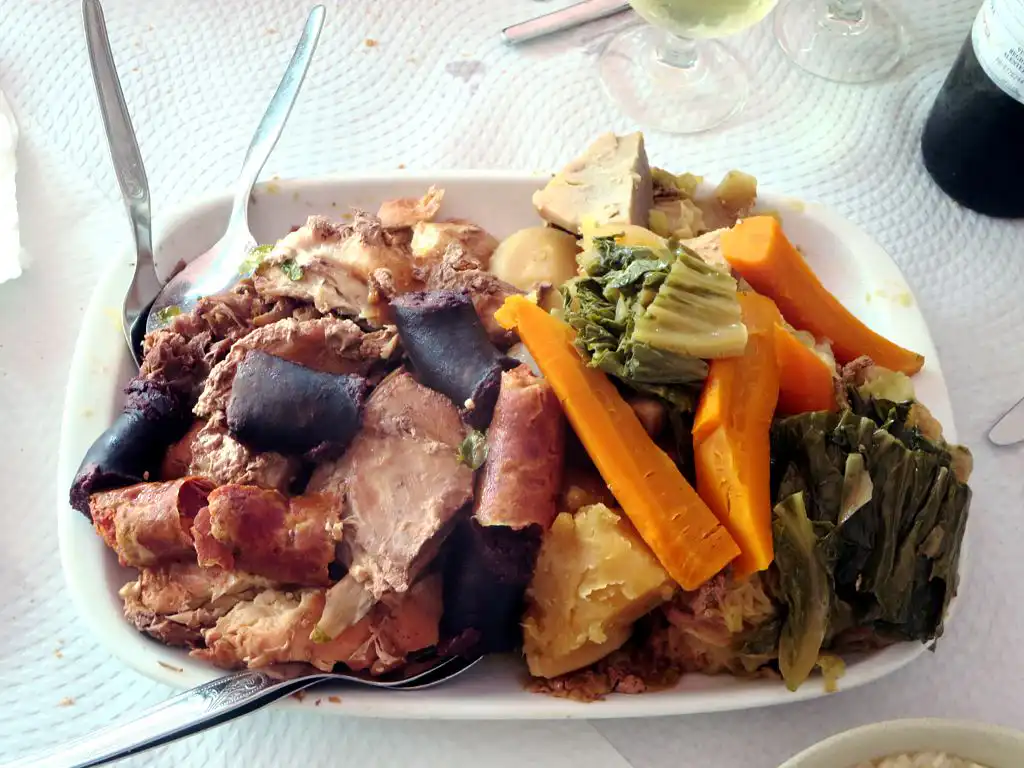
Making an authentic Cozido à Portuguesa is a rewarding process that requires some patience and organization, but the result is a comforting, flavorful stew perfect for sharing. Here’s a detailed guide to help you prepare this classic dish step by step.
Preparation: Cleaning and Chopping
- Gather Ingredients: Collect your meats (pork belly, ribs, trotters, beef shank, chicken, chouriço, morcela, farinheira) and vegetables (cabbage, potatoes, carrots, turnips, collard greens). Rinse all fresh produce thoroughly.
- Prepare the Meats:
- Rinse all meat cuts under cold water.
- If using trotters or tougher cuts, consider soaking them briefly in salted water to remove impurities.
- Pat dry with paper towels.
- Rinse all meat cuts under cold water.
- Chop the Vegetables:
- Cut the cabbage into large wedges.
- Peel and quarter the potatoes and turnips.
- Slice carrots into thick chunks.
- Wash and roughly chop collard greens.
- Cut the cabbage into large wedges.
- Prepare the Sausages:
- Keep chouriço, morcela, and farinheira whole as they will be cooked in the stew and sliced when served.
- Keep chouriço, morcela, and farinheira whole as they will be cooked in the stew and sliced when served.
Cooking Method: Pot Layering and Simmering
- Fill a Large Pot with Water: Use a big, heavy-bottomed pot to accommodate all ingredients comfortably. Fill with enough water to cover the meats and vegetables but leave room to avoid overflow.
- Start with the Toughest Meats:
- Place pork trotters, beef shank, and pork ribs at the bottom. These take the longest to cook and release rich flavors into the broth.
- Bring water to a boil, then reduce to a gentle simmer.
- Place pork trotters, beef shank, and pork ribs at the bottom. These take the longest to cook and release rich flavors into the broth.
- Add Pork Belly and Chicken: After about 30–45 minutes of simmering, add pork belly and chicken pieces. Continue simmering to allow these to cook through and infuse the broth.
- Add Root Vegetables:
- After the meats have cooked for about an hour, add potatoes, turnips, and carrots. These take roughly 30–40 minutes to soften.
- After the meats have cooked for about an hour, add potatoes, turnips, and carrots. These take roughly 30–40 minutes to soften.
- Add Sausages and Greens Last:
- Place chouriço, morcela, and farinheira on top of the other ingredients after the vegetables have been cooking for 10–15 minutes. These sausages cook quickly and should not overcooked.
- Add the cabbage wedges and collard greens in the last 10–15 minutes of cooking to retain some texture and color.
- Place chouriço, morcela, and farinheira on top of the other ingredients after the vegetables have been cooking for 10–15 minutes. These sausages cook quickly and should not overcooked.
- Check for Tenderness:
- After about 2.5 to 3 hours total simmering time, test the meats and vegetables with a fork. They should be tender and easy to pierce.
- Adjust seasoning with salt if necessary, but usually, the meats and sausages provide enough saltiness.
- After about 2.5 to 3 hours total simmering time, test the meats and vegetables with a fork. They should be tender and easy to pierce.
Timing Summary
- 0 min: Tough meats (trotters, beef shank, ribs) in cold water, bring to simmer
- 30–45 min: Add pork belly and chicken
- 60–75 min: Add potatoes, turnips, carrots
- 90 min: Add sausages, cabbage, and collard greens
- 120–180 min: Simmer until everything is tender
Serving: Family-Style Presentation
- Arrange the Ingredients: Traditionally, Cozido is served on a large platter or in separate bowls with the broth on the side. Arrange the meats first, then the vegetables, and finish with the sausages sliced for easy sharing.
- Serve with Broth: Ladle some of the flavorful cooking broth into small bowls or a serving tureen. It can be sipped alongside or poured over the rice if you serve it.
- Accompanied with Rice or Bread: Steamed white rice or crusty Portuguese bread pairs beautifully with Cozido, helping soak up the broth and balance the richness.
- Encourage Sharing: Place the platter centrally so everyone can help themselves, encouraging communal dining — a key part of the Cozido experience.
Tips for Large Batches or Leftovers
- Scaling Up: Cozido is perfect for feeding larger groups. Just increase ingredient quantities proportionally and use an even bigger pot or slow cooker if available.
- Storage: Leftovers keep well refrigerated for up to 3 days. The flavors often deepen overnight, making it even better the next day.
- Reheating: Gently reheat on the stove over low heat, adding a splash of water or broth to loosen the stew if needed.
- Repurposing Leftovers: Use leftover meats in sandwiches or soups. Vegetables can be mashed or tossed in salads.
Cozido Cooking Tips and Common Mistakes
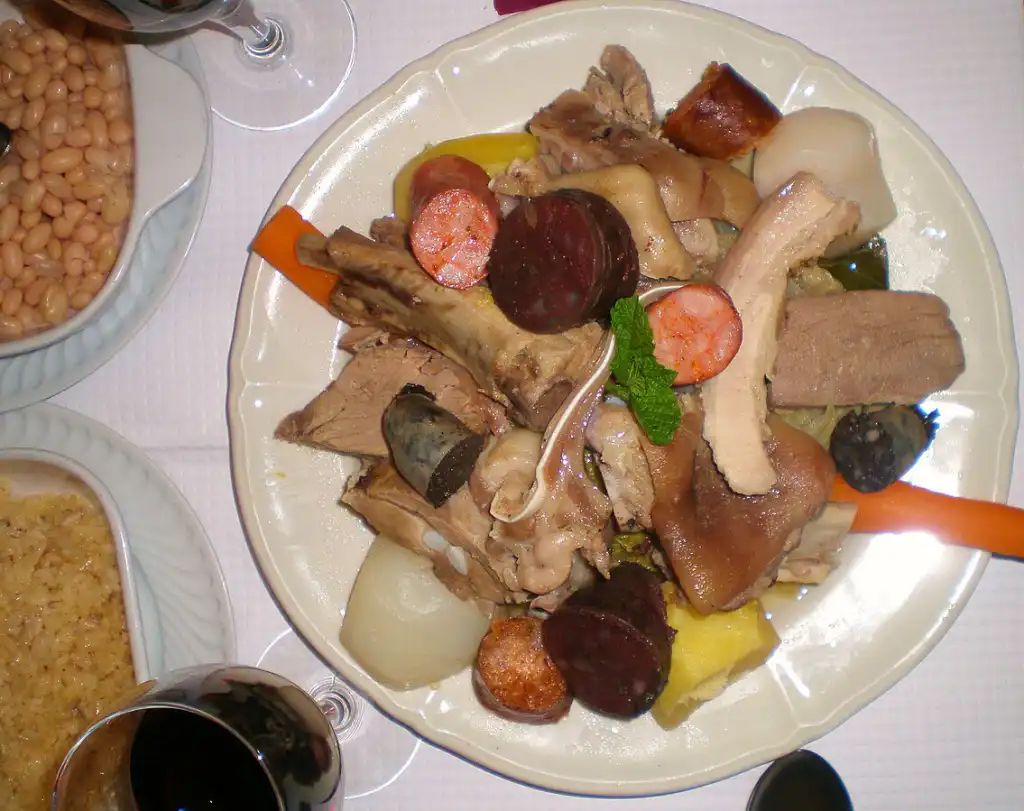
Cooking Cozido à Portuguesa well requires some care to balance flavors and textures. Here are practical tips to help you avoid common errors and get the best results:
- Balance rich flavors:
Use a variety of meats for depth, but avoid adding too many strong sausages that can overpower the stew. Taste the broth before adding salt, as the meats usually provide enough seasoning. - Avoid mushy vegetables:
Add root vegetables like potatoes, carrots, and turnips early since they need longer cooking (30–40 minutes). Add delicate greens like cabbage and collard greens in the last 10–15 minutes to keep their texture and color. Cutting vegetables into larger chunks helps them stay firm. - Prevent overcooked sausages:
Sausages such as chouriço, morcela, and farinheira cook quickly—add them only in the last 10–15 minutes to prevent them from bursting or drying out. - Use a gentle simmer:
Bring the pot to a boil first, then reduce to a low simmer. Slow cooking keeps the broth clear and ingredients intact. A heavy-bottomed pot helps distribute heat evenly. - Skim excess fat:
Fat rises during cooking; remove it every 30–45 minutes using a spoon or ladle to keep the broth clear and avoid greasiness. - Layer ingredients properly:
Place tougher meats at the bottom to infuse the broth fully. Add lighter meats, vegetables, and sausages according to their cooking times to ensure everything cooks evenly.
By following these tips, you’ll master the art of Cozido with perfectly cooked meats and vegetables, rich flavors, and a clear, delicious broth.
Best Wine and Side Pairings for Cozido
Cozido à Portuguesa is a rich and hearty stew that pairs wonderfully with wines and sides that balance its deep, savory flavors. Choosing the right accompaniments can elevate the meal and bring out the best in every bite.
When it comes to wine, Portuguese reds are a natural fit:
- Douro reds: Full-bodied with deep fruit and balanced acidity, these wines complement the meatiness of Cozido perfectly.
- Dão wines: Known for their elegant tannins and earthy notes, Dão wines add a refined layer to the dining experience.
- Alentejo reds: Spicy and fruity, these wines bring warmth and roundness that work beautifully alongside the stew.
For a lighter alternative, Vinho Verde offers crisp acidity and a slight fizz that refreshes the palate between bites, cutting through the richness without overwhelming it.
Traditional sides keep things simple and authentic:
- Rustic Portuguese bread is ideal for soaking up the flavorful broth.
- A bowl of olives adds a salty, briny contrast.
- Steamed rice helps balance the richness and soak up juices.
It’s best to avoid overly heavy or sweet sides and wines, like dessert wines or creamy cheeses, which can clash with Cozido’s hearty and rustic character.
If you want to deepen your appreciation for Portuguese wines, especially those famous in Porto, consider the Port Wine Tasting Porto experience. Hosted in a beautiful setting, this tasting introduces you to premium Port houses and pairs each Port with exquisite artisan chocolates crafted in Portugal. It’s a perfect way to discover the rich history and flavors of Port wines, enhancing your understanding of Portugal’s wine culture alongside traditional dishes like Cozido.
If you’re eager to explore more Portuguese flavors beyond Cozido à Portuguesa, the Portuguese Tapas Class + Bolhão Tour in Porto is a fantastic way to do so. This highly-rated experience lasts around four hours and is perfect for anyone aged 14 and above who wants to learn authentic Portuguese cooking in a hands-on, fun environment.
Portuguese Tapas Class + Bolhao Tour

The experience begins at the corner between Manteigaria and Leitaria Quinta do Paço, where you’ll meet the chef—easy to spot by their chef’s hat. You’ll start with a guided tour of the famous Mercado de Bolhão, sourcing fresh, seasonal ingredients essential to Portuguese cuisine. After a short 10-minute walk to the kitchen at Boutique Maison Canto De Luz, you’ll enjoy a Barista coffee and a freshly baked pastel de nata before getting cooking.
The heart of the class is a hands-on culinary workshop. After watching the chef demonstrate, you’ll prepare a variety of traditional Portuguese tapas, or “Tapiscos.” The seasonal menu often features favorites like flame-grilled chouriço, fresh clams in white wine and lemon sauce, and cod fish pancakes (Pataniscas de Bacalhau). Vegetarian and vegan options are also available, as well as classic Portuguese desserts such as coffee and leche de dulce.
At the end of the session, you’ll enjoy the meal you’ve prepared alongside your classmates, paired with a crisp glass of Douro Valley wine (additional wines available for purchase). Each participant leaves with a goodie bag full of recipes plus a travel-friendly bottle of aguardente to recreate the magic of Porto back home.
Details at a glance:
- Duration: 4 hours
- Age: 14+
- Price: From €119 per person
- Meeting point: Corner between Manteigaria and Leitaria Quinta do Paço
- What’s included:
- Guided market tour
- Hands-on cooking workshop
- Barista coffee and pastel de nata
- Lunch featuring dishes prepared in class with a glass of Douro wine
- Guided market tour
- What’s not included:
- Menu changes due to seasonal availability
- Gratuities
- Pick-up and drop-off from accommodation (optional add-on)
- Video recordings
- Menu changes due to seasonal availability
This class offers a perfect blend of food, culture, and fun—an ideal way to deepen your connection to Porto and Portuguese cuisine while making lasting memories.