


At A Glance
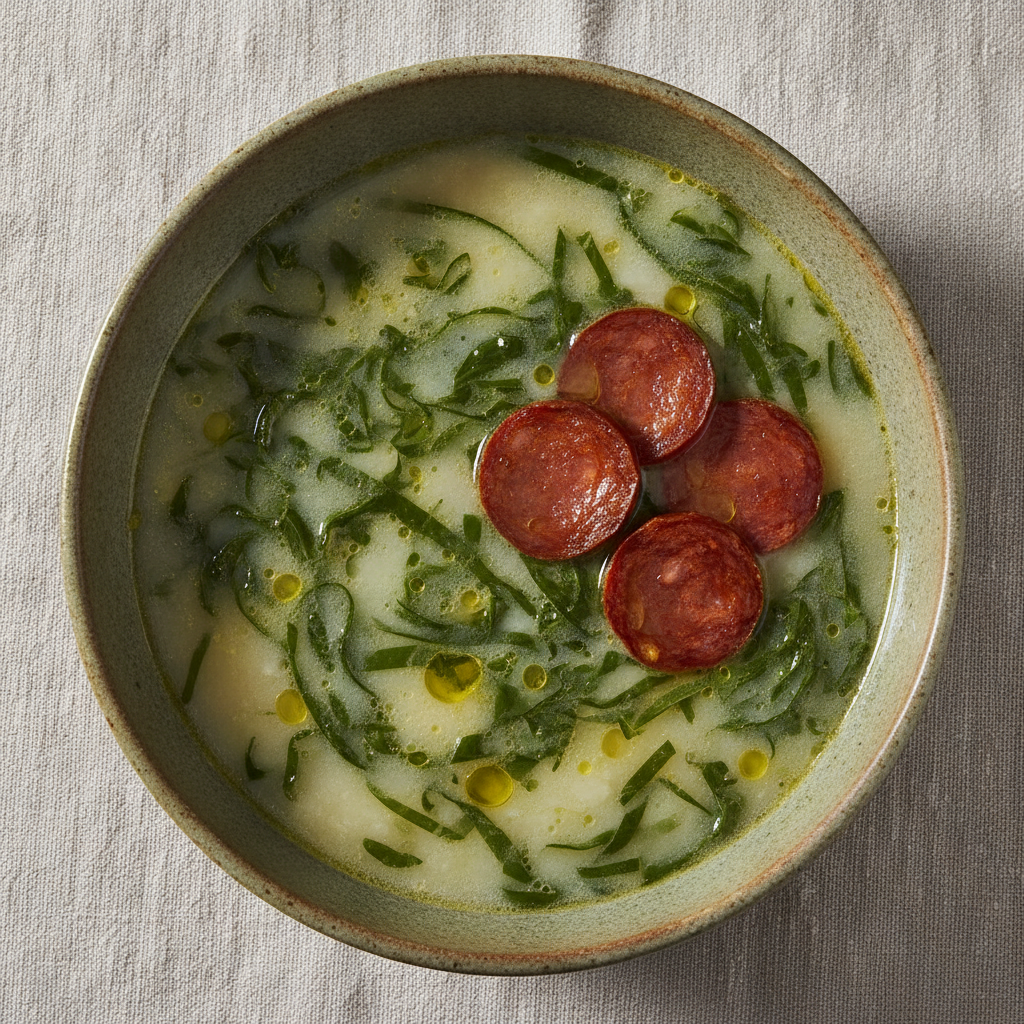
Caldo verde is Portugal’s national soup: a smooth potato and olive oil base with finely shredded couve galega and a few slices of chouriço.
- The name means “green broth”. It comes from the Minho, the region directly north of Porto.
- The kale is sliced into ribbons 1 to 2mm wide, and cooked for only 3 to 5 minutes.
- Four core ingredients: potato, onion, olive oil, couve. The chouriço is a garnish, not a base.
- Traditionally served with broa de milho, the dense northern cornbread.
- You can cook it with us on Rua do Almada, a 10-minute walk from Bolhão Market.
Every country has a soup it argues about. Portugal’s is caldo verde, and the argument is never about whether it belongs on the table but about how thin the kale should be cut. It is served at weddings, at village festivals, at São João in June when Porto stays up all night, and at kitchen tables on ordinary Tuesdays. If you are eating your way through the traditional foods of Porto, this is the one you are most likely to be handed without asking.
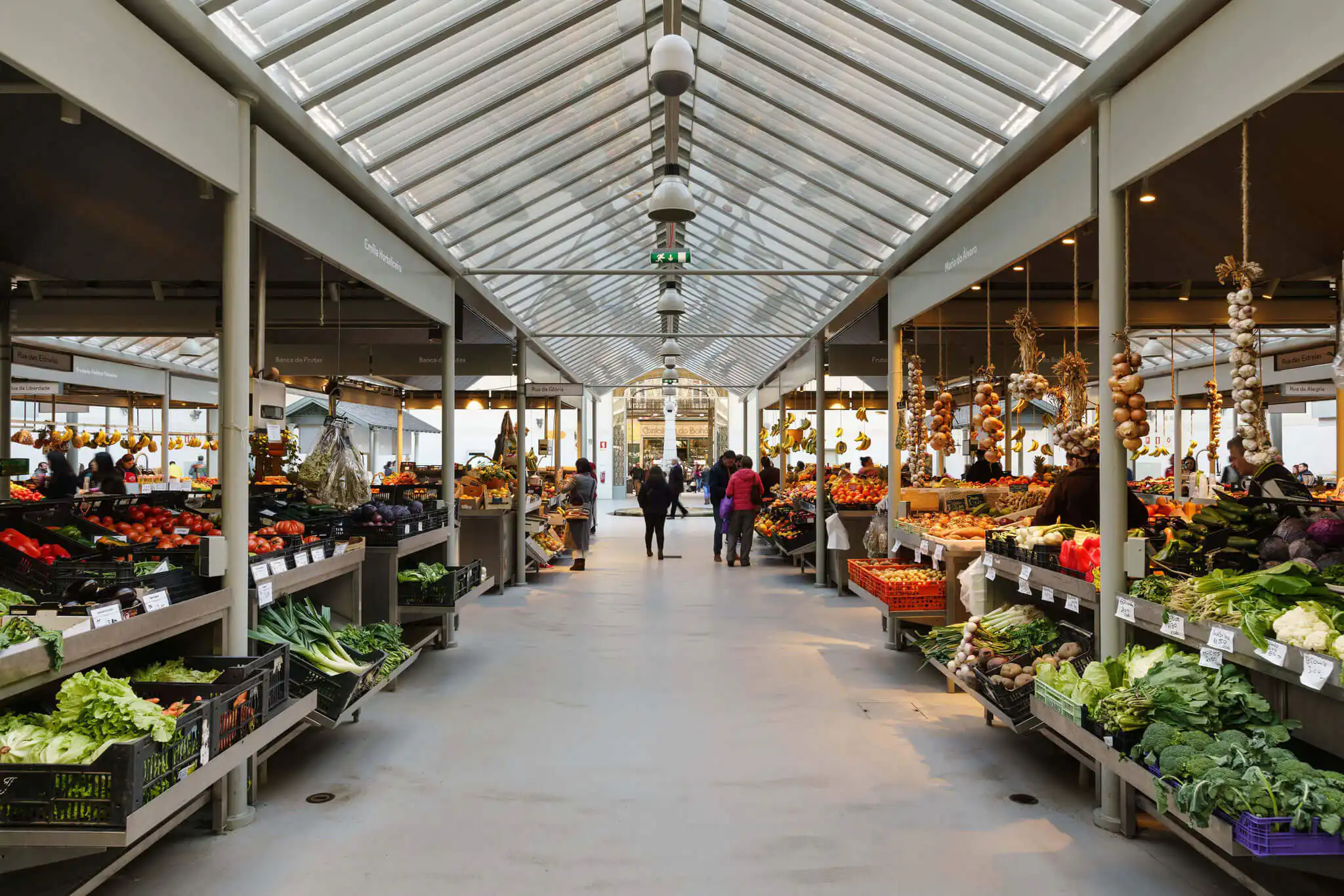
It is also the dish visitors most often get wrong at home, and almost always for the same reason: the kale is cut too thick and cooked too long, which turns a bright green broth into something grey and cabbagey. The fix takes about ninety seconds of knife work. Everything else is potato, good olive oil, and restraint. Ingredients you can pick up in one pass through Mercado do Bolhão.
Here is what caldo verde actually is, why the English-speaking world knows it under a different name, and how it is made in northern Portugal.

Rather learn it hands-on?
Our chef-led market tour and tapas class runs four hours from Bolhão, with lunch and Douro wine at the end.
What Is Caldo Verde?
Caldo verde translates literally as green broth. It is a soup of two halves: a smooth, pale base of potato, onion, garlic and olive oil blitzed until velvety, and a scattering of very finely shredded dark green couve stirred in at the last moment so it keeps its colour and a slight bite. A few coins of chouriço go on top, and a thread of raw olive oil goes over everything just before it reaches the table.
What makes it distinctive is the texture contrast. The base should be thick enough to coat a spoon but still pourable, closer to a loose purée than a broth despite the name. Against that, the kale stays separate and springy. When the two merge into one soft green mass, the dish has been overcooked.
It is peasant food in the best sense: four cheap ingredients, no stock, no cream, no butter. The olive oil does the work that fat usually does elsewhere, which is why using a decent Portuguese oil matters more here than in almost any other dish.
Why It Is Also Called Portuguese Kale Soup
If you search for this dish in English you will often find it as Portuguese kale soup or Portuguese green soup, and those names come from the Portuguese diaspora rather than from Portugal. Communities in New England, particularly around Fall River and New Bedford, and in Hawaii, brought caldo verde with them and it entered local cooking under a translated name.
Those versions have drifted, usually toward something heartier: more sausage, sometimes beans, sometimes a tomato base, often the kale left in larger pieces. They are good soups in their own right and worth eating, though a cook from the Minho would recognise them as relatives rather than the same dish.
Worth separating out here: Portuguese bean soup, the sopa de feijão popular in Hawaii, is a genuinely different dish with beans, tomato and often macaroni. If a recipe includes kidney beans and pasta, you are looking at that, not at caldo verde.
Where Caldo Verde Comes From
The soup belongs to the Minho, the green, rainy province stretching north from Porto to the Spanish border. It is the same landscape that produces Vinho Verde, and for the same reason: high rainfall, small terraced plots, smallholdings growing what the family eats.
Couve galega, the tall loose-leaved kale the soup depends on, grows on thick stalks in kitchen gardens across the region, harvested leaf by leaf over months rather than pulled whole. That agricultural detail explains the recipe: a household with a permanent supply of one green vegetable and a sack of potatoes will find a way to make the pairing taste like something, and this is what they arrived at.
From there it spread across the country and, by most measures, became the most eaten soup in Portugal. Porto adopted it wholesale. It shares a table here with the city’s other slow, thrifty classics, the same thinking that produced cozido à portuguesa and rancho à portuguesa.
Caldo Verde Ingredients
The Couve
Couve galega is the correct leaf. Outside Portugal, collard greens are the closest match, and standard curly kale is an acceptable substitute if you strip the stems and slice finely. Cavolo nero works but pushes the flavour darker and slightly bitter. Whatever you use, the leaf needs to be sturdy: baby spinach and soft salad leaves collapse into nothing.
The Chouriço
Portuguese chouriço, smoked and paprika-heavy, cut into thin coins. Two or three slices per bowl is traditional. Spanish chorizo is a workable substitute but is usually more assertive, so use less. The sausage is seasoning here rather than substance, which surprises people expecting the sausage-heavy diaspora versions.
The Base
Floury potatoes, not waxy: you want them to break down. One onion, a couple of garlic cloves, water rather than stock, and a genuinely generous pour of olive oil. This is the one place not to economise. A grassy, peppery Portuguese oil from Trás-os-Montes or the Douro changes the finished soup completely.
Caldo Verde Recipe
Serves 6. About 40 minutes start to finish.
Ingredients
- 1kg floury potatoes, peeled and roughly chopped
- 1 large onion, chopped
- 3 garlic cloves, peeled
- 1.5 litres water
- 120ml Portuguese olive oil, plus more to finish
- 250g couve galega or collard greens, very finely shredded
- 1 chouriço, sliced into thin coins
- Salt
Method
- Put the potatoes, onion and garlic in a large pan with the water and a good pinch of salt. Bring to the boil and simmer for 20 minutes, until the potatoes are falling apart.
- Blend until completely smooth, then return to the pan. The consistency should coat a spoon but still pour. Loosen with a little hot water if it has gone claggy.
- Stir in the olive oil and bring back to a gentle simmer. Taste and salt properly now, before the greens go in.
- Drop in the shredded couve and cook for 3 to 5 minutes only. It should stay bright and keep a slight bite.
- Meanwhile, dry-fry the chouriço coins for a minute a side, until the fat runs and the edges catch. Some cooks simmer the sausage in the soup instead; frying gives a cleaner base and a better texture.
- Ladle into bowls, lay two or three chouriço slices on each, and finish with a thread of raw olive oil.
Serve immediately. Caldo verde does not hold well: the greens dull within about twenty minutes. If you need to make it ahead, prepare the base and add the couve only once people are sitting down.
Cook it with us in Porto
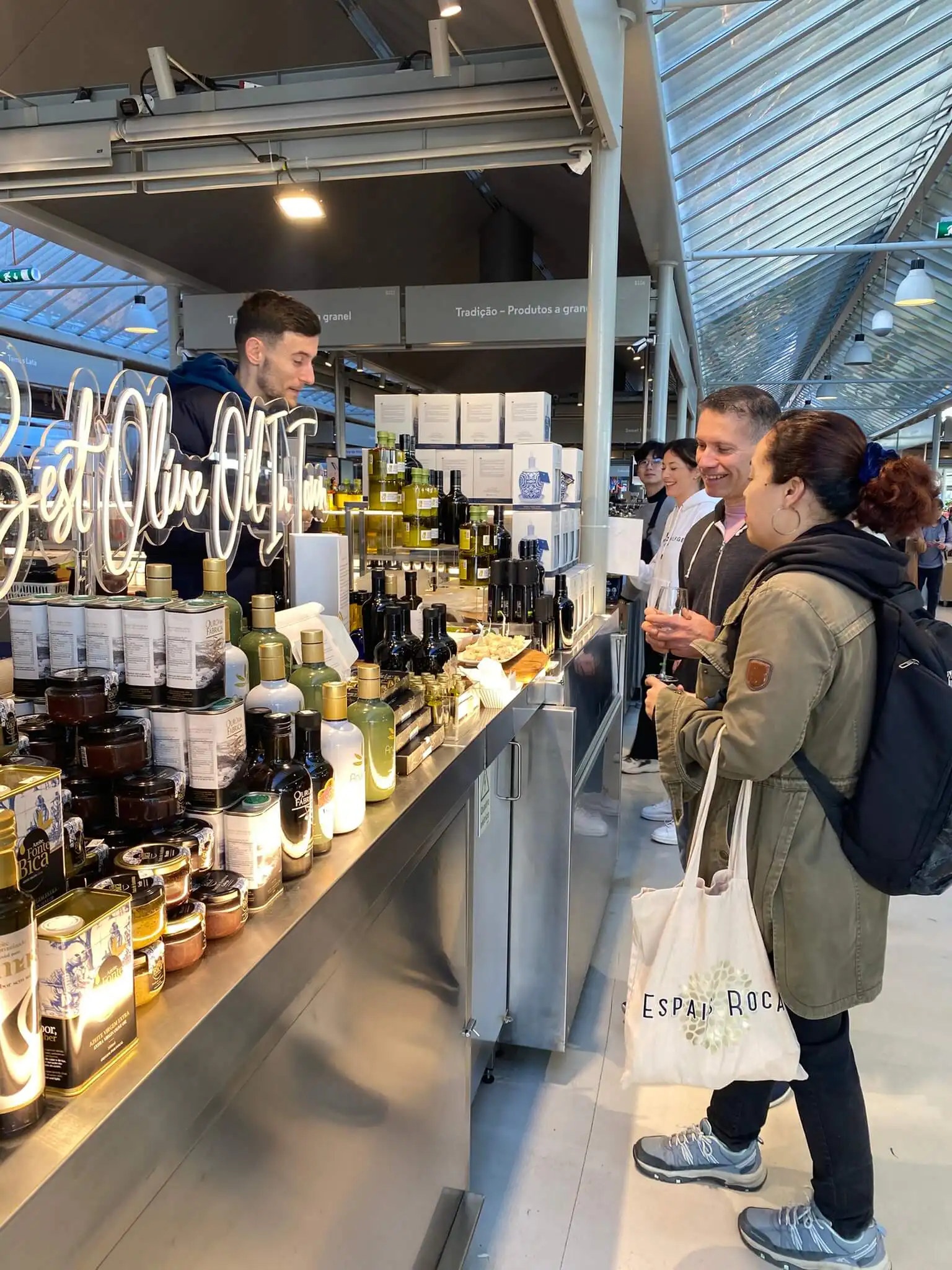
Our chefs walk you through Bolhão for the ingredients, then hand you a knife. Small groups, demo-and-do, lunch and a glass of Douro wine at the end.
How to Shred the Couve
This is the step that separates a good caldo verde from a disappointing one, and it is worth doing properly.
- Strip the leaves off the central stalk and discard the stalk entirely. It never softens in the short cooking time.
- Stack six or eight leaves flat on top of each other.
- Roll the stack into a tight cigar, keeping the roll firm.
- Slice across the roll as finely as you can manage, aiming for ribbons 1 to 2mm wide. Thinner is always better.
- Shake the ribbons loose before adding them so they do not go in as a clump.
In Portuguese markets you can skip all of this. Stalls sell couve ready-shredded in bags, cut on a machine far finer than any home cook manages, and most Porto households buy it that way without embarrassment.
What to Serve With Caldo Verde
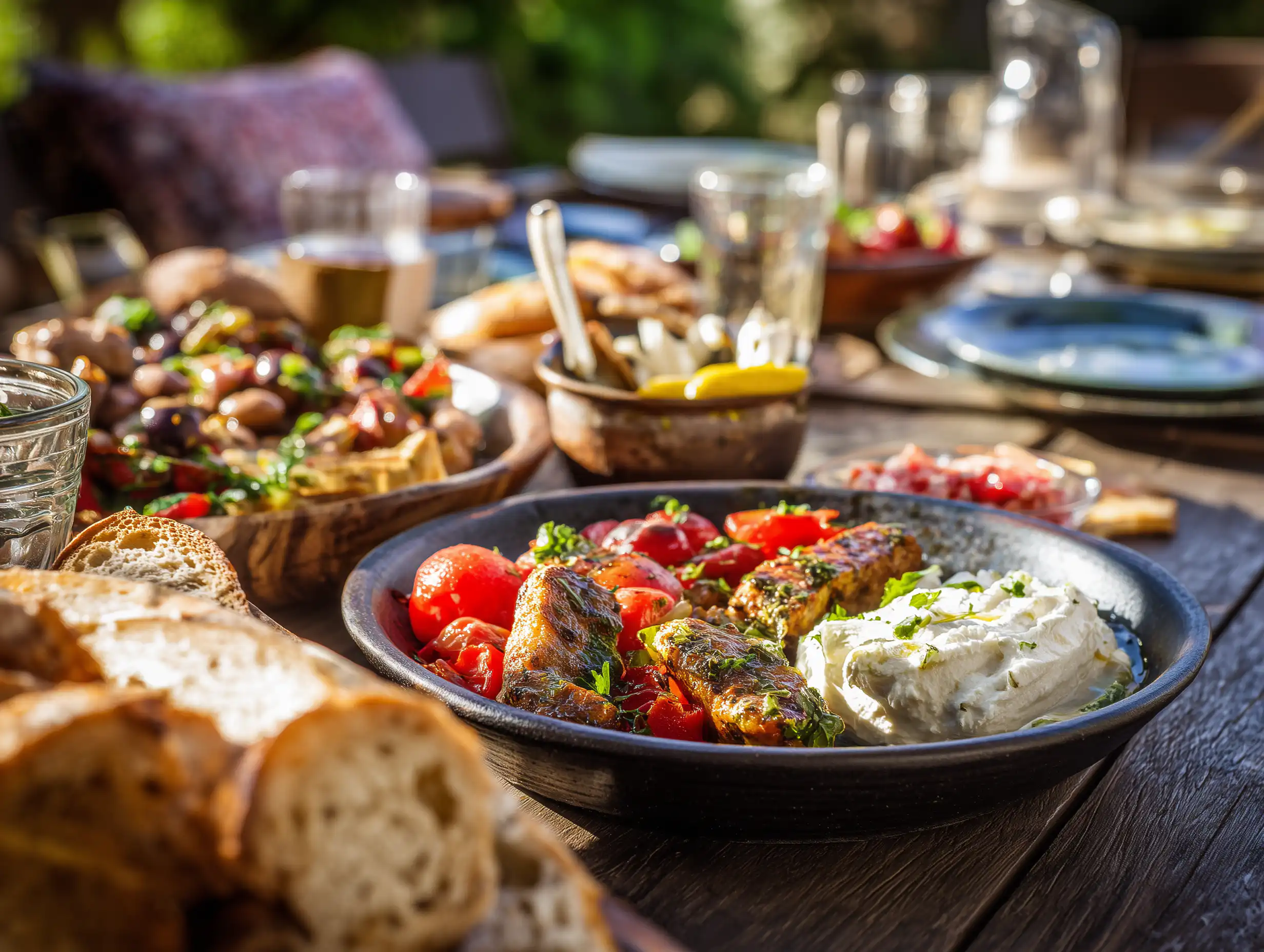
Broa de milho is the traditional partner: a dense, slightly sweet cornbread with a thick crust, made across the north. It is heavy enough to hold up to the soup rather than dissolving into it, and the corn works with the olive oil in a way wheat bread does not. Any good Porto bakery will have it, and our guide to bakeries in Porto points to the reliable ones.
For drinking, a young Vinho Verde is the regional answer and the obvious one, sharing both the geography and the acidity to cut the oil. A light Douro red works too, particularly in winter. Caldo verde is also, traditionally, what gets served late at night at festivals to people who have been drinking for some hours, which tells you something about its restorative reputation.
As a starter it precedes almost anything. In a Porto tasca it will typically arrive before grilled fish or a plate of roast meat, in a bowl smaller than you expect.
Where to Eat Caldo Verde in Porto
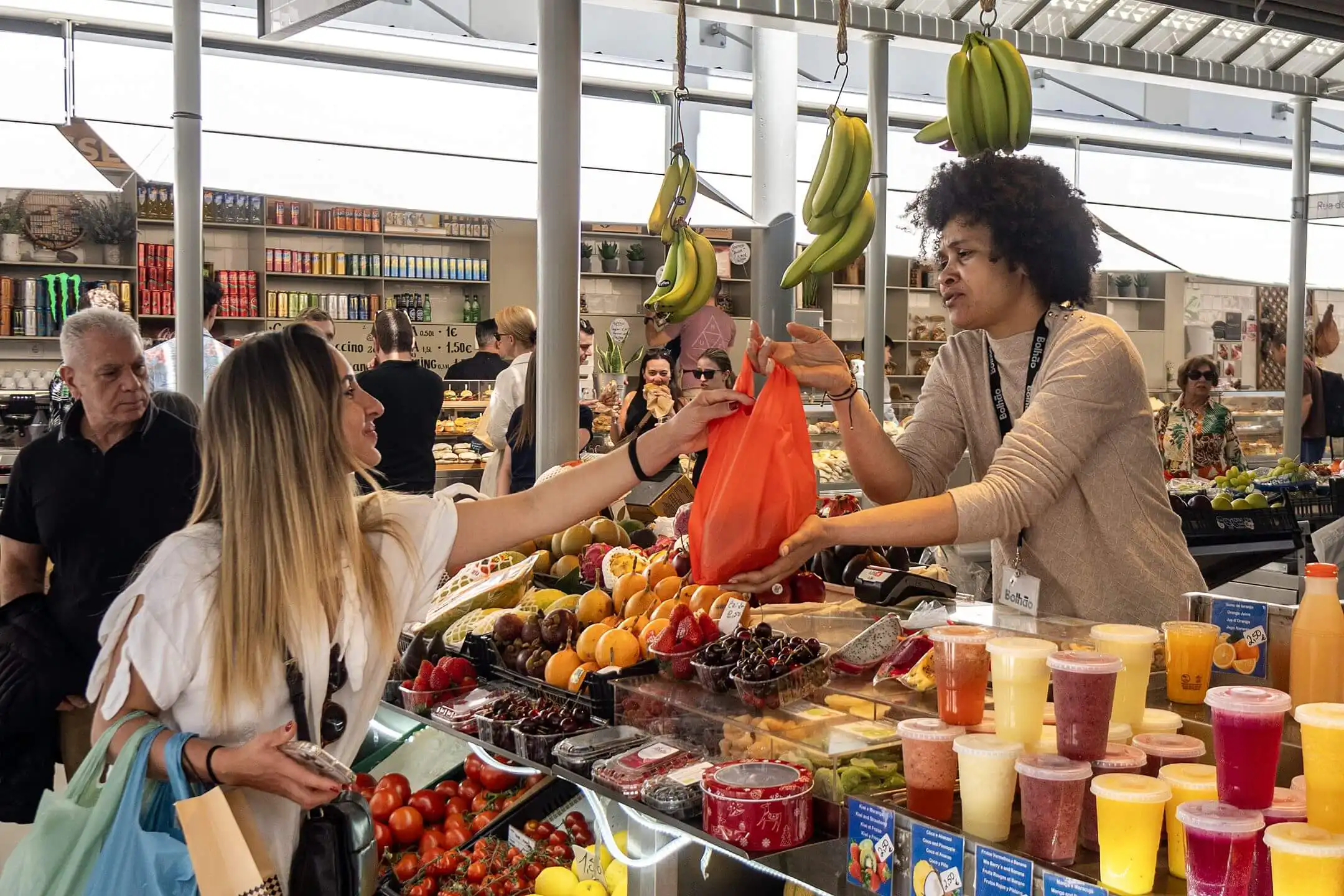
Almost everywhere, which is the useful answer. Any traditional restaurant, any tasca, most cafés at lunchtime, and every festival stall in June. It is rarely a headline menu item; it sits quietly in the starters section and costs very little.
The version to look for is one where the kale is visibly fine and still green rather than olive-drab, and where the bowl arrives with oil pooling on the surface. If you are choosing where to eat more generally, our guide to restaurants in Porto covers where locals actually go.
June is the best time to eat it in the city. During São João, caldo verde is handed out in paper cups across the streets of the old town at two in the morning, and it tastes considerably better than that description suggests.

“We did the cooking class, which was a lot of fun and the food was great. Really enjoyed exploring the market and tasting the olive oils, and then cooking out lunch together. Learned a lot, and the recipes are all ones that we can replicate at home. Really fun experience and would definitely recommend as a different way of experiencing some Portuguese culture.”
— Lisa Elliott, via
Cooking Caldo Verde in Porto
Caldo verde is a good dish to learn in person precisely because it is so short. There is nowhere to hide: the knife work, the seasoning point, and the moment the greens go in all happen within a few minutes of each other, and getting a feel for them is faster with someone standing next to you.
Our classes run demo-and-do, in small groups, starting at Bolhão so you see the couve and the chouriço before you cook them. Guests leave with the recipes. If you are comparing what is available, we have written up the cooking classes in Porto, ours included, and the dishes we teach sit alongside our Portuguese tapas recipes.
Frequently Asked Questions
What Is Caldo Verde?
Caldo verde is a Portuguese soup made from a smooth potato, onion and olive oil base with finely shredded couve galega stirred in at the end and a few slices of chouriço on top. The name means “green broth”. It is widely considered Portugal’s national soup.
Is Caldo Verde the Same as Portuguese Kale Soup?
They are the same dish in origin. Portuguese kale soup is the name used by diaspora communities in New England and Hawaii, where the recipe drifted toward more sausage, larger pieces of kale and sometimes beans or tomato. Caldo verde in Portugal is smoother, lighter and greener.
What Kale Do You Use for Caldo Verde?
Couve galega, a tall loose-leaved Portuguese kale. Collard greens are the closest substitute outside Portugal, and curly kale works if you strip the stems and slice very finely. Avoid soft leaves like spinach, which collapse.
How Thin Should the Kale Be Cut?
Ribbons of 1 to 2mm. Stack the leaves, roll them into a tight cigar and slice across as finely as you can. Portuguese markets sell couve ready-shredded by machine, which is finer than most home cooks manage and what many Porto households buy.
What Does Caldo Verde Mean?
It translates literally as “green broth”, from caldo meaning broth and verde meaning green. The name describes the finished bowl rather than any specific ingredient.
Where Is Caldo Verde From?
The Minho, the province of northern Portugal running from Porto to the Spanish border. It is the same region that produces Vinho Verde, and the soup spread from there across the whole country.
Can You Make Caldo Verde Without Meat?
Yes. The base of potato, onion, garlic, water and olive oil contains no meat, and the chouriço is a garnish. Leave it out and you have a vegan soup that is still recognisably caldo verde, though you may want a little more salt and olive oil to compensate.
What Do You Serve With Caldo Verde?
Broa de milho, the dense northern Portuguese cornbread, is traditional. A young Vinho Verde is the regional wine pairing. It is usually served as a starter before grilled fish or roast meat, in a smaller bowl than visitors expect.
Taste, Discover, Delight
Learn Portugal’s classics in a Porto kitchen
Market tour, hands-on class, lunch with Douro wine, and the recipes to take home. Small groups at Canto de Luz on Rua do Almada.
Book a cooking class