


Mercado do Bolhão: Essential Details
- Opening hours: Monday to Friday 08:00–20:00, Saturday 08:00–18:00, closed Sunday. Restaurants trade until midnight Monday to Saturday.
- Admission: free. No ticket is required to enter or to walk the galleries.
- Address: Rua Formosa and Rua Fernandes Tomás, with the entrance on both streets. Metro Bolhão is at the door.
- Scale: 81 market stalls, 38 street-facing shops and 10 restaurants across two levels, reopened in September 2022.
Mercado do Bolhão has been Porto’s central food market since 1914, and since its restoration it operates as a working market rather than a converted food court. Produce traders, fishmongers, butchers and florists occupy the ground-floor galleries, while the upper level combines further stalls with restaurants and tasting counters. It remains the place where a significant number of Porto households buy their fish and vegetables.
Canto Cooking begins its market tour here several mornings a week, so the practical guidance below reflects how the building actually works: when the traders are at their busiest, which entrance to use, what is worth buying and what is better eaten on site. For the wider culinary picture, our Porto food guide covers the dishes you will encounter, and the traditional foods of Porto explains what to look for on the stalls.
Mercado do Bolhão Opening Hours and Admission
The market trades six days a week and closes on Sundays and public holidays. Restaurant and bar concessions on the upper level keep considerably longer hours than the produce stalls, which is worth knowing if you intend to visit in the evening rather than to shop.
| Day | Market stalls | Restaurants and bars |
|---|---|---|
| Monday to Friday | 08:00 – 20:00 | 08:00 – 00:00 |
| Saturday | 08:00 – 18:00 | 08:00 – 00:00 |
| Sunday and public holidays | Closed | Closed |
Entry is free and no advance booking is needed. Individual traders set their own hours within the market schedule, and fresh fish and produce stalls generally begin to wind down an hour or so before the official closing time, particularly on Saturdays. Arriving before 13:00 gives the fullest picture of the market in operation.
How to Get to Mercado do Bolhão in Porto
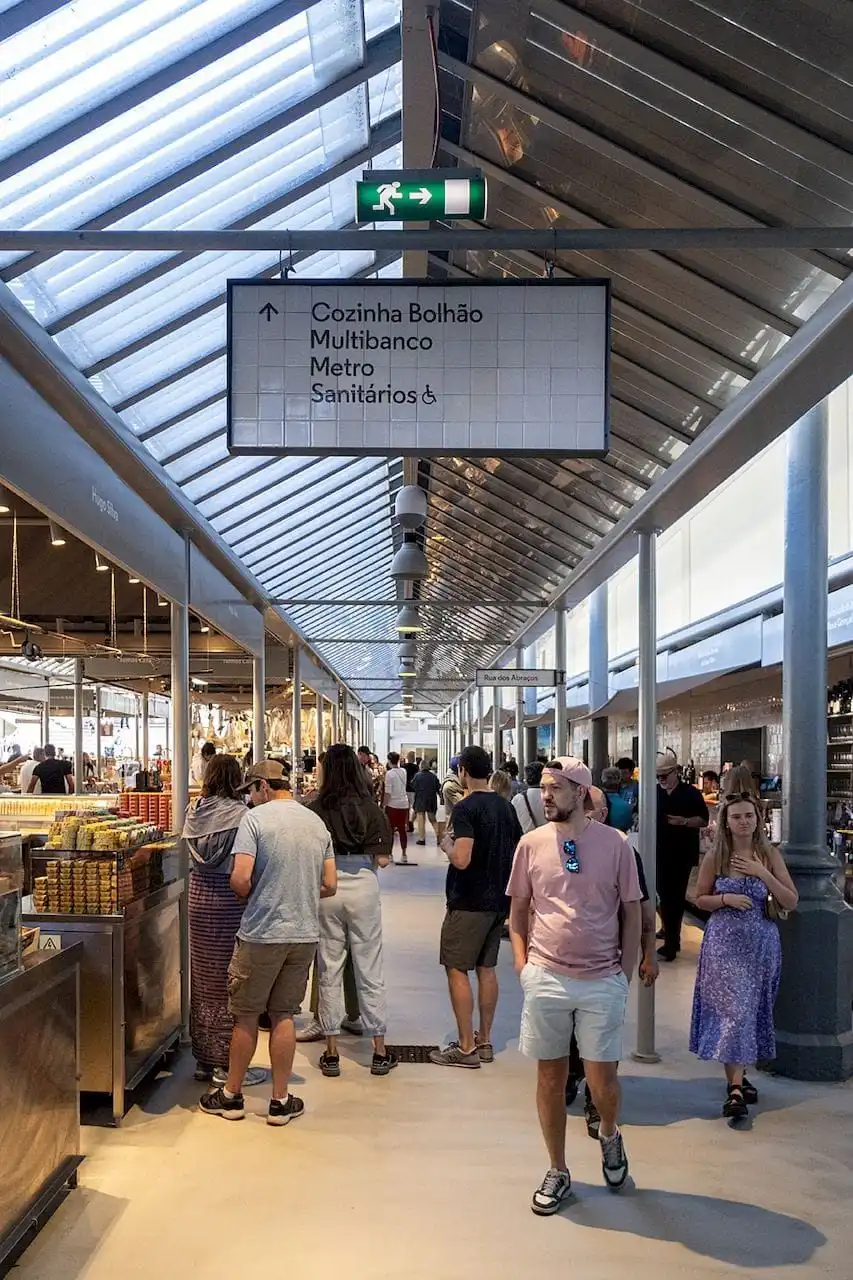
The market occupies a full city block in the Santo Ildefonso district, a short walk uphill from Avenida dos Aliados. The restoration added a direct connection to the metro, which makes it one of the most straightforward landmarks in Porto to reach by public transport.
Reaching Mercado do Bolhão
- Metro — Bolhão station sits directly beneath the market, served by lines A, B, C, E and F. Signage inside the building points to the metro access.
- On foot — approximately five minutes from Avenida dos Aliados and ten minutes from São Bento station, uphill in both cases.
- Entrances — the building has street entrances on Rua Formosa, Rua Fernandes Tomás, Rua de Sá da Bandeira and Rua Alexandre Braga.
- Tickets — a rechargeable Andante card covers the metro journey and is bought from machines at any station.
The metro is the simplest approach from anywhere outside the centre, and a single Andante zone ticket covers the journey from São Bento, Trindade or Campanhã. If you are working out which zone applies to your hotel, our Porto public transport guide explains the zone system, where to buy the card and how to validate it correctly, which matters because unvalidated tickets carry a fine.
Driving is not recommended. The surrounding streets are narrow, largely pedestrianised and subject to restricted access, and the nearest parking is in paid underground facilities several blocks away. Most visitors combine the market with other stops in the historic centre, which is comfortably walkable from the entrance.
The four entrances are not equivalent in practice. Rua Formosa opens onto the street-facing shops including the historic bakery, while Rua Fernandes Tomás brings you into the produce galleries most directly. Arriving from the metro places you in the lower level, from which stairs and lifts reach both floors.
Inside Mercado do Bolhão: The Stall Layout
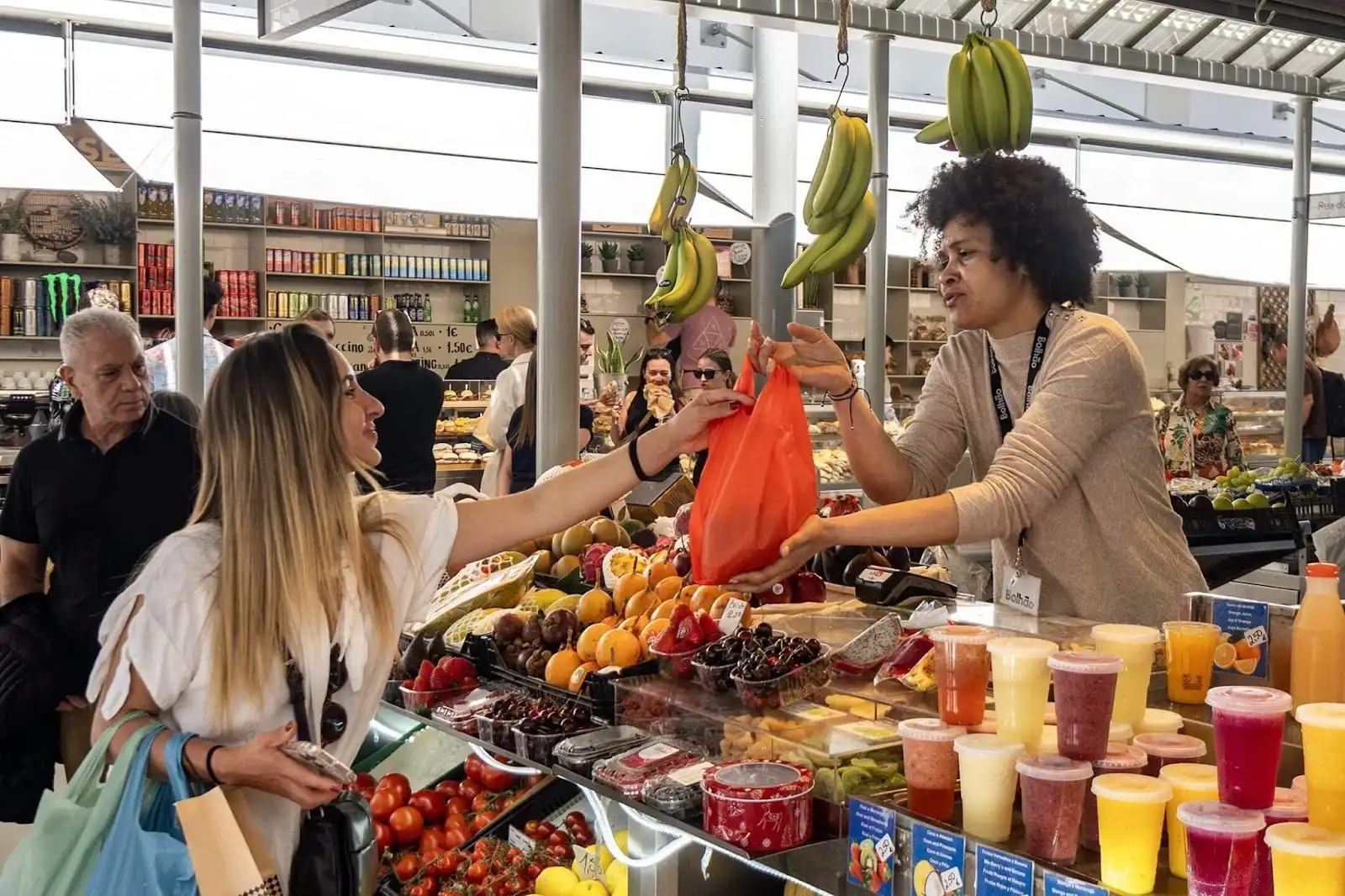
The building is arranged as a rectangular hall around a central open courtyard, with a wraparound gallery on the upper level. The internal aisles are named as streets, a convention retained from the original market, and the signage at each junction identifies both the aisle and the traders along it.
| Level | What you will find | Best time to visit |
|---|---|---|
| Ground floor, central galleries | Fruit and vegetable stalls, flowers, dried goods, garlic and onion strings | 08:00 – 13:00, at their fullest |
| Ground floor, outer aisles | Fishmongers, butchers, salt cod specialists, delicatessens | Early morning for the widest choice of fish |
| Upper gallery | Restaurants, wine and tasting counters, Cozinha Bolhão food hall | Midday onwards, and evenings |
| Street-facing shops | 38 units including bakeries, grocers and Confeitaria do Bolhão | Independent hours, generally from 08:00 |
The interior aisles carry names such as Rua das Estrelas, Rua da Liberdade, Rua da Alegria and Rua dos Abraços. Orientation is straightforward once inside, as all four aisles return to the central courtyard, and signage at the junctions directs visitors to the food hall, the metro access, cash machines and toilets.
A practical route through the building is to enter at ground level, walk the produce galleries first while the stalls are fully stocked, then take the stairs to the upper gallery for a view down over the halls before stopping to eat. That order also matches how the market fills through the day, with the produce traders busiest in the morning and the restaurants from midday. Many of the ingredients on those stalls appear in the dishes covered in our guide to Porto food, which is worth reading before you shop.
What to Buy at Mercado do Bolhão
The market serves residents as well as visitors, which means the produce stalls are priced for regular shopping rather than for souvenirs. Purchases that travel well are the obvious choice for anyone staying in a hotel, while self-catering visitors will find everything needed for a Portuguese meal within a single gallery.
Worth buying at the stalls
- Bacalhau — salt cod sold whole or in portions, stacked at the dedicated fishmongers. Traders will advise on soaking times for the cut you choose.
- Cured meats — chouriço, alheira, presunto and farinheira, sold by weight and vacuum-packed on request.
- Tinned fish — sardines, mackerel and tuna in decorated tins, among the most practical items to carry home.
- Cheese — Serra da Estrela, Azeitão and regional goat and sheep cheeses, cut to order.
- Olive oil and wine — Douro and Vinho Verde bottles alongside northern olive oils at prices below those in the tourist streets.
- Flowers and dried goods — garlic and onion strings, dried beans, piri-piri and bay, all inexpensive and long-lasting.
Prices are generally displayed, and most traders now accept card payment, although small cash purchases remain quicker. Produce is sold by the kilo, and asking for a smaller quantity than a full kilo is entirely normal. For baked goods, the bakeries of Porto guide covers the shops immediately around the market as well as those inside it.
Traders are accustomed to advising visitors and will generally explain what a cut of bacalhau needs before cooking, or which cheese is at its best that week. A short exchange at the counter is normal practice rather than an imposition, and English is widely spoken at the stalls that deal with visitors most often. If you intend to cook what you buy, the traditional dishes of Porto are the natural starting point, and most of their ingredients are available within a few metres of one another here.
Visit Mercado do Bolhão With a Chef, Then Cook What You Buy
Our chef-led market tour starts inside Bolhão, where you choose the ingredients with a local chef and learn what to look for at each stall. The group then cooks a full Portuguese meal and sits down to eat it with wine. Four hours, small groups, ages 14 and up, from €119 per person.
Where to Eat Inside Mercado do Bolhão
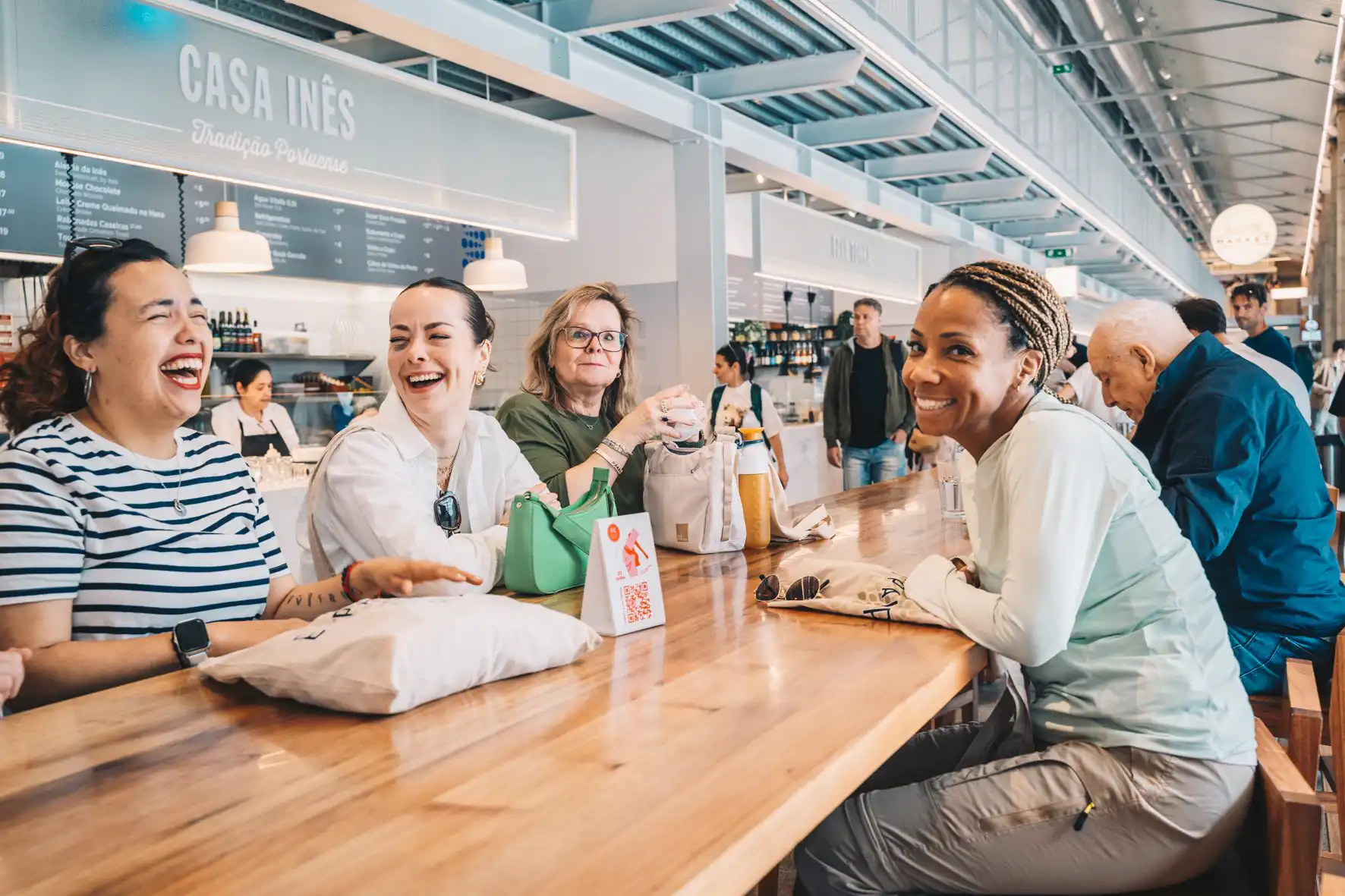
Eating at Bolhão falls into two categories. The upper gallery houses sit-down restaurants and tasting counters serving full meals, while the ground-floor traders and street-facing shops sell items intended to be eaten immediately or taken away.
Eating options at the market
- Cozinha Bolhão — the food hall on the upper level, signposted throughout the building, with several kitchens around shared seating.
- Tasting counters — wine, port, cheese and cured meat served by the glass and the plate, generally without reservation.
- Seafood bars — oysters, prawns and grilled fish prepared from the stock on the fish stalls below.
- Confeitaria do Bolhão — the historic bakery on Rua Formosa, in operation since 1896, for bread and Portuguese pastries.
- Fresh juice and fruit — prepared at several produce stalls on the ground floor, useful for a quick stop mid-visit.
Lunch service on the upper level fills between 13:00 and 14:30, particularly at weekends, and the shared seating operates on a first-come basis. Visiting slightly earlier or later avoids the pressure for tables. Prices are moderate by Porto standards and considerably lower than the restaurants along the Ribeira waterfront, which is one reason the market remains popular with people who work nearby rather than only with visitors.
The distinction worth understanding is that Bolhão is not a food court built around restaurants. The kitchens on the upper level buy from the traders below, which means the menus shift with what is on the stalls that week rather than staying fixed year round. Fish dishes in particular depend on the morning’s catch, and asking what is good that day tends to produce a better meal than reading the printed menu.
If you would rather eat a full sit-down meal elsewhere and treat the market as a shopping stop, the streets immediately around it hold a number of traditional tascas serving a prato do dia at lunchtime. Combining the two works well: shop the stalls in the morning, then eat within a few minutes’ walk. An afternoon on the water pairs naturally with either, and our guide to Porto boat tours and Douro river cruises covers the departures from the nearby quays.
The Mercado do Bolhão Renovation and History
The market was first planned in 1839, and the building that stands today was inaugurated in 1914 to a neoclassical design by António Correia da Silva. Its two-tier iron gallery structure, arranged around an open central courtyard, was unusual for a Portuguese market of the period and is the element that the restoration preserved most carefully.
The restoration in brief
- 2018 — work begins on a project led by architect Nuno Valentim, with traders relocated to a temporary market nearby.
- Four years of structural repair — the iron galleries, granite façades and tiled surfaces were restored rather than replaced, at a cost of approximately €50 million.
- 15 September 2022 — the market reopens to the public.
- 71 of 81 historic traders returned to the restored building, retaining the licences they had held before the works.
- Modern additions — direct metro access, a new basement for deliveries, and accessible routes across both levels.
The building now covers a façade of more than 8,000 square metres beneath a roof exceeding 5,000 square metres. The decision to return the original licence holders rather than tender the units commercially is the reason Bolhão still functions as a produce market rather than as a food court, and it is the clearest difference between Bolhão and the newer market halls elsewhere in the city.
The restoration also resolved the problem that had made the works necessary. By the 2010s the iron structure had corroded badly, sections of the upper gallery were closed on safety grounds, and trader numbers had fallen as conditions deteriorated. Rather than demolish and rebuild, the project stabilised the original ironwork, re-laid the granite and replaced the roof glazing, which is why the interior still reads as a building from 1914 rather than a modern hall inside a retained façade.
For visitors, the practical result is a market that looks historic but functions to current standards, with lifts to both levels, accessible routes throughout, and refrigeration at the fish and meat stalls that the old building never had. The temporary market that housed the traders during the works, on nearby Rua Fernandes Tomás, has since closed and all activity has returned to the original site.
Practical Tips for Visiting Mercado do Bolhão
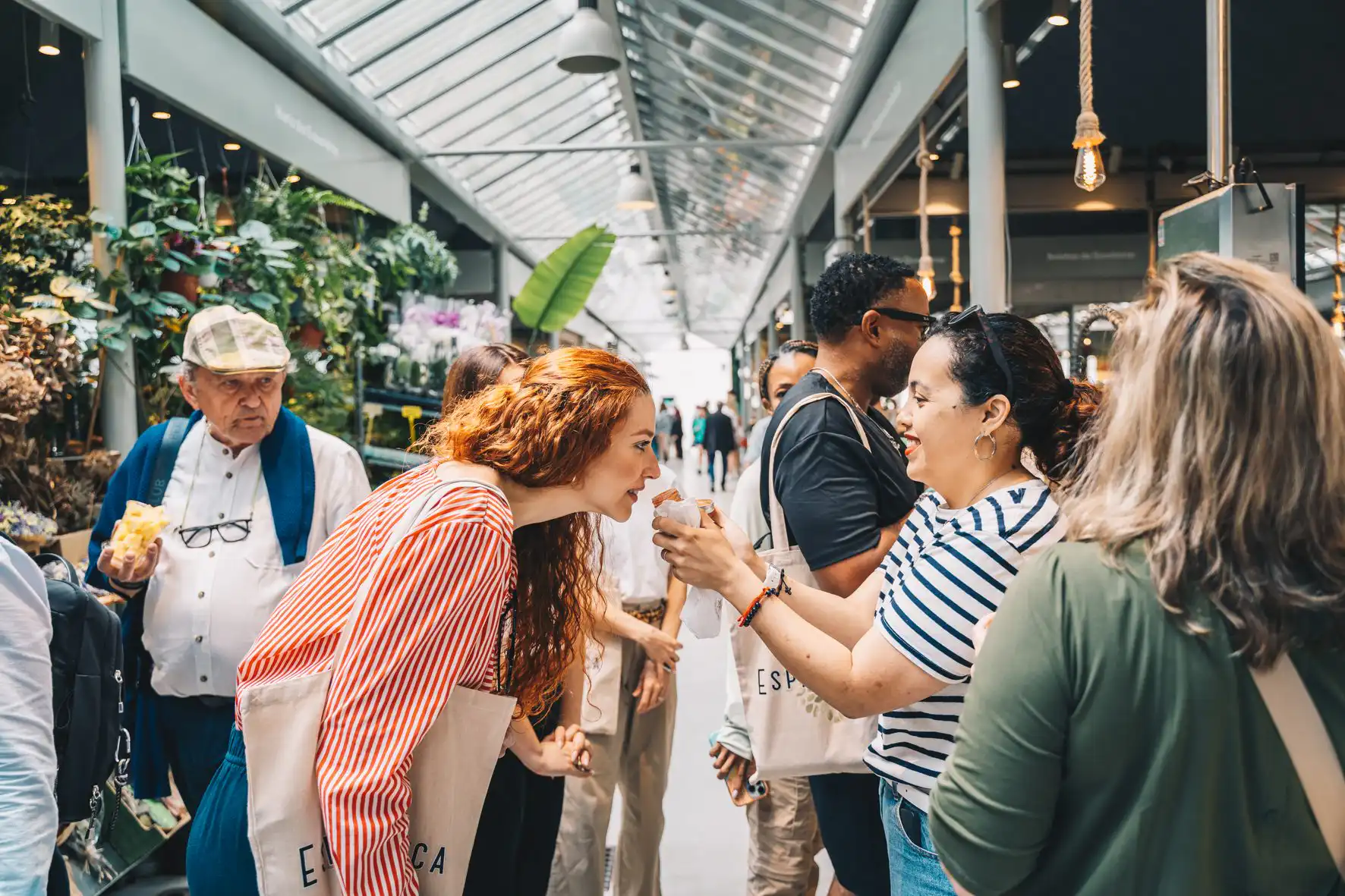
The market rewards an unhurried visit, and an hour is enough to walk both levels without rushing. Timing has more effect on the experience than anything else, as the difference between a working Tuesday morning and a crowded Saturday afternoon is considerable.
Before you go
- Go on a weekday morning. Tuesday to Friday before midday is when the traders are busiest and the produce is at its best.
- Carry some cash. Cards are widely accepted but small purchases are faster in cash, and a few traders still prefer it.
- Ask before handling produce. Traders prefer to select and weigh items themselves, which is standard practice in Portuguese markets.
- Bring a bag. Plastic bags are chargeable and many stalls no longer provide them by default.
- Avoid Sunday. The market is closed all day, as are the street-facing shops and restaurants.
Photography is permitted throughout the building, though asking a trader before photographing their stall is both courteous and usually met with agreement. The upper gallery gives the best vantage point over the produce halls below, and the light through the glazed roof is strongest in the middle of the day.
Where to Stay Near Mercado do Bolhão
Staying within walking distance of the market has a practical advantage beyond convenience. The produce stalls are at their best before midday, and being ten minutes away on foot makes an early visit realistic in a way that a hotel across the river does not. The streets immediately around Bolhão, in the Santo Ildefonso and Bonfim districts, sit between the market and Avenida dos Aliados and remain largely residential.
What to look for in the area around the market
- Walking distance — anywhere between Aliados, Rua de Santa Catarina and Rua do Almada puts the market within a ten-minute walk.
- A kitchen, if you intend to cook — much of what the market sells is worth buying only if you can use it, and self-catering apartments are common in this part of the centre.
- Quiet streets — Rua de Santa Catarina is busy well into the evening, while the streets a block west are considerably calmer.
- Metro access — Bolhão, Trindade and Aliados stations are all within a short walk of one another, which makes the wider city easy to reach.
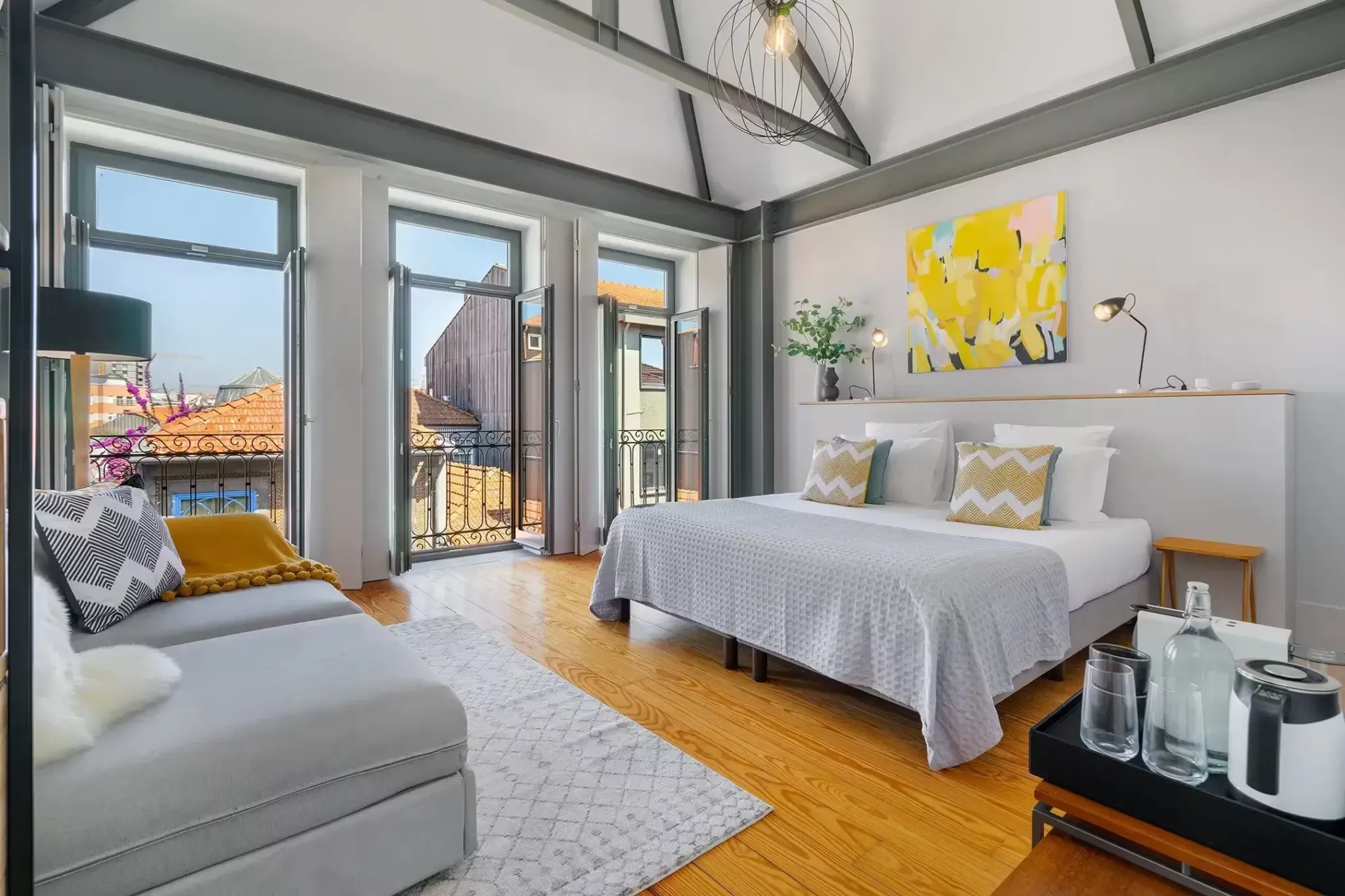
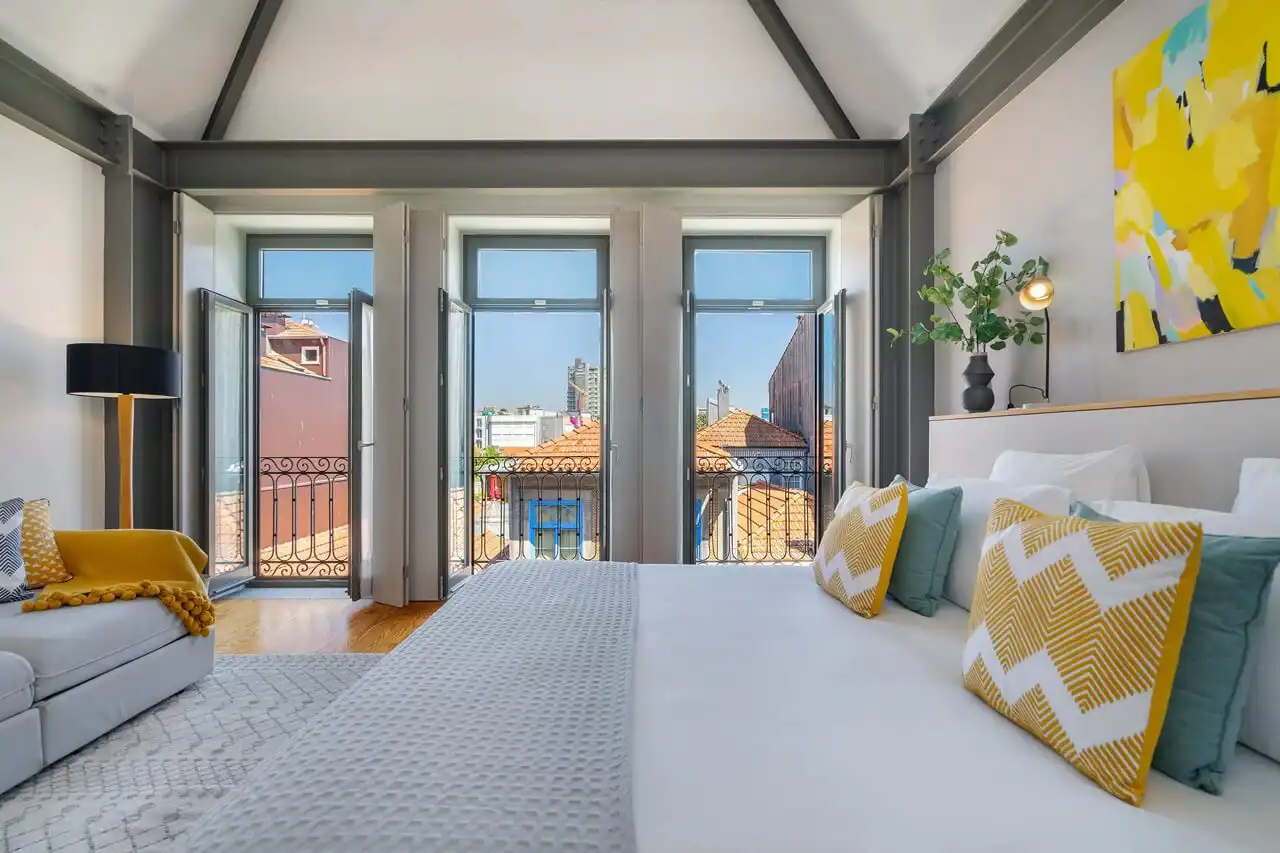
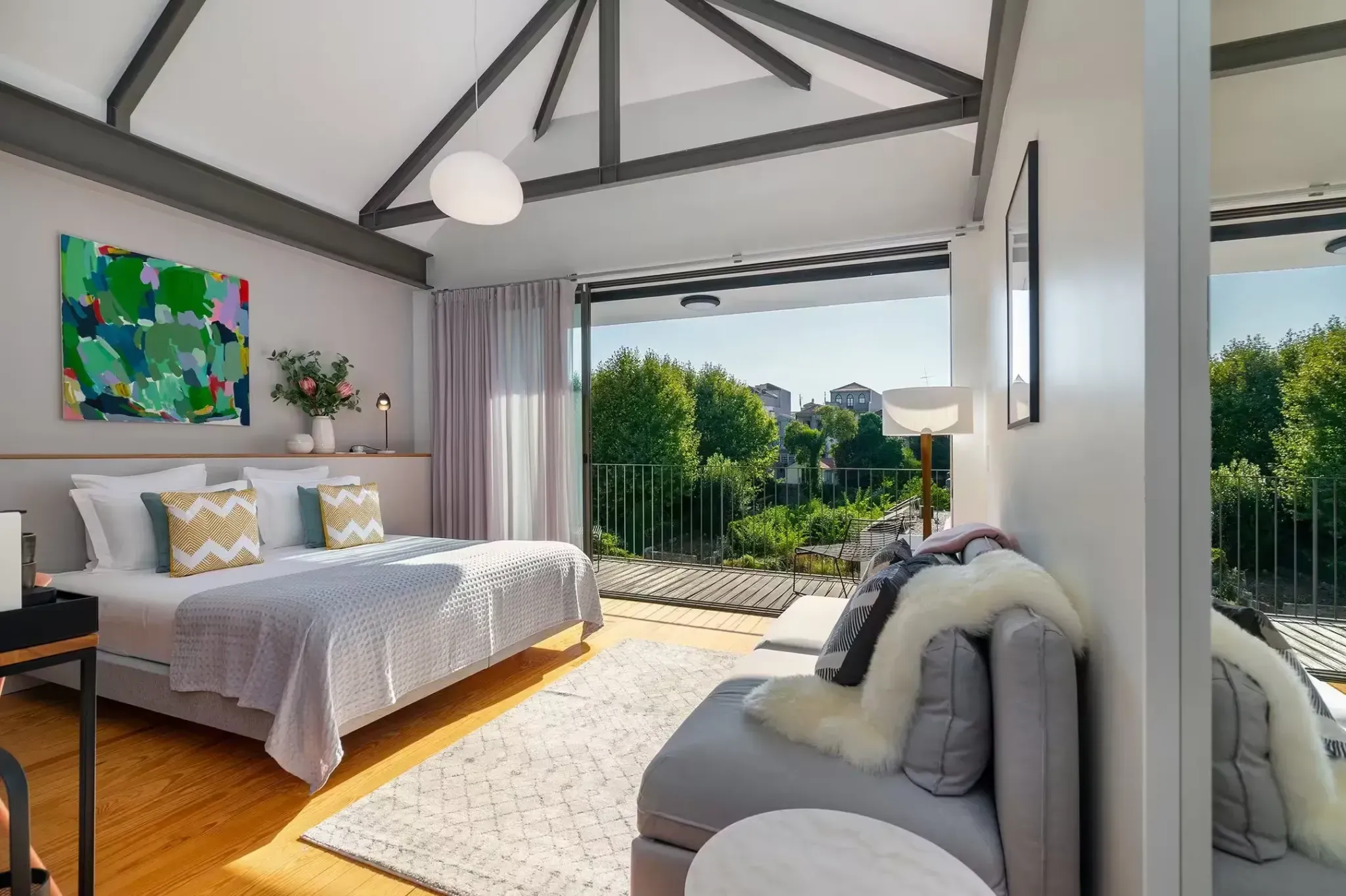
Canto de Luz is a boutique hotel on Rua do Almada in the old town, set back from the main streets and about five minutes from Avenida dos Aliados. The property is where Canto Cooking’s kitchen is based, and the breakfast served there is made with ingredients bought at Mercado do Bolhão, so the connection between the two is a working one rather than a marketing line.
Accommodation ranges from Maison suites with city views to studio apartments and two-bedroom retreats, with a heated saltwater pool and the option to take the whole house for a group. Guests staying there generally combine a market morning with a cooking class in the same building, which removes the problem of carrying fresh produce back across the city. Full details and availability are on the Canto de Luz website.
Planning Your Visit to Mercado do Bolhão
Bolhão sits within a few minutes’ walk of Avenida dos Aliados, São Bento station and the shopping streets of Santa Catarina, which makes it straightforward to combine with the rest of a day in the centre. A visit of an hour covers both levels comfortably, and adding lunch on the upper gallery extends that to two. Pairing the market with an afternoon on the river works well, and our guide to Porto boat tours and Douro river cruises sets out the options from the nearby quays.
Visitors who want to understand what they are looking at, rather than simply walk through, generally get more from the market in the company of someone who shops there. Canto Cooking runs its market tour from inside Bolhão most mornings, followed by a cooking class and lunch, and details are below.
Market Tour and Portuguese Cooking Class From Bolhão
Shop the stalls with a local chef, then cook a Portuguese menu and eat it together with wine. Four hours from Mercado do Bolhão, small groups, ages 14 and up, from €119 per person.
“We had a great time in this cooking class. Priscilla was awesome, we enjoyed all of the dishes, the market tour at the beginning was great, and the setting for the cooking (and eating!) portion at Canto de Luz was also great! We lucked out with some friendly participants too!”
Phil Jones
Mercado do Bolhão Questions Answered
The questions below cover the points most often raised before a first visit, including opening hours, admission, accessibility and how the market differs from the other food halls in Porto.
What Are The Mercado Do Bolhão Opening Hours?
The market trades Monday to Friday from 08:00 to 20:00 and Saturday from 08:00 to 18:00, and is closed on Sundays and public holidays. Restaurants and bars on the upper level serve until midnight Monday to Saturday.
Is There An Entrance Fee For Mercado Do Bolhão?
No. Entry is free and no ticket or reservation is required. Guided tours of the market are sold separately by private operators.
How Many Stalls Are There At Mercado Do Bolhão?
The restored market contains 81 stalls, 38 street-facing shops and 10 restaurants. Of the 81 traders licensed before the renovation, 71 returned to the reopened building.
When Did Mercado Do Bolhão Reopen After Its Renovation?
The market reopened on 15 September 2022, following work that began in 2018 under architect Nuno Valentim at a cost of approximately €50 million. Traders operated from a temporary market nearby during the four-year restoration.
What Is The Best Time To Visit Mercado Do Bolhão?
A weekday morning between 08:00 and 13:00, when the produce stalls are fully stocked and the traders are at their busiest. Saturday is considerably more crowded, and the fish and produce stalls begin to close earlier that day.
How Do You Get To Mercado Do Bolhão By Metro?
Bolhão metro station sits directly beneath the market and is served by lines A, B, C, E and F. Signage inside the building marks the metro access, and an Andante card covers the journey.
Is Mercado Do Bolhão Worth Visiting?
Bolhão remains a working produce market rather than a food court, which distinguishes it from the newer market halls in Porto. Visitors interested in Portuguese ingredients, salt cod, cured meats and regional cheese will find it the most complete single location in the city. Those looking primarily for a meal may prefer the upper gallery or one of the dedicated food halls.