
Porto is famous not only for its Port wine and riverfront but also for its amazing churches. The churches in Porto have some of the most beautiful religious architecture in Portugal and offer visitors a mix of art, history, and cultural heritage. Whether you are drawn by faith, fascinated by history, or captivated by architecture, visiting these landmarks will give you a deeper insight into the city’s past.
From Baroque masterpieces to small chapels from centuries ago, the churches in Porto show a mix of architectural styles and historical influences. Many were designed by famous architects, have intricate details, and hold priceless religious artifacts, making them cultural landmarks in the city.
For a deeper understanding of the city, including its history, population, climate, and key facts, explore our comprehensive guide: Porto: Exploring Its History, Population, Climate, and Essential Facts.
1. Clérigos Church (Igreja dos Clérigos)
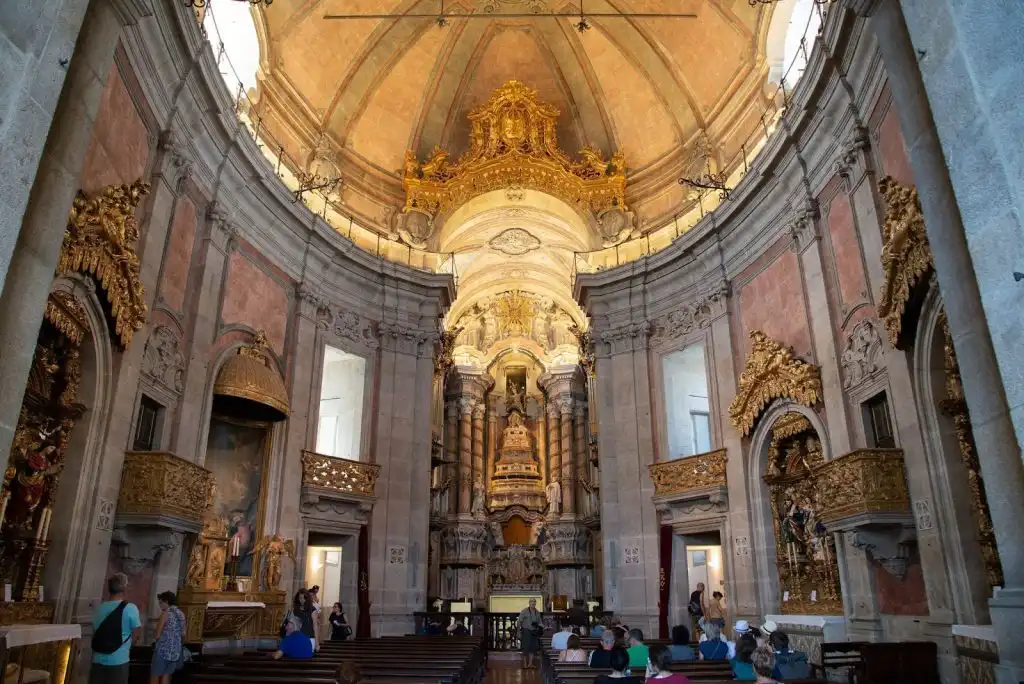
Clérigos Church is one of Porto’s most famous landmarks, recognizable by its 75-meter-tall bell tower, the Torre dos Clérigos, that dominates the city skyline. This Baroque beauty was designed by Italian architect Nicolau Nasoni, one of the most important architects in Porto’s history.
History of Clérigos Church
- Built for the Brotherhood of the Clérigos, a religious association of clergy members.
- Construction started in 1732 and finished in 1750; the bell tower and grand staircase were completed in 1763.
- The tower was inspired by Tuscan campaniles and was a navigational landmark for sailors on the Douro River.
- Nasoni later joined the Clérigos Brotherhood and was buried in the church’s crypt—but the exact location of his tomb is unknown.
Architectural Highlights
- Baroque Façade: Decorated with garlands, shells, and religious motifs from early 17th-century Roman churches.
- Elliptic Floorplan: One of the first churches in Portugal to have an oval-shaped nave, a Baroque feature.
- Grand Staircase: Adds to the church’s monumental entrance.
- Altarpiece: The main chapel has a polychromed marble altar by Manuel dos Santos Porto.* Clérigos Tower: 75.6 meters high and offers one of the best views in Porto. 240 steps across 6 floors to get to the top.
Interesting Facts
- Since 2015 the church and tower have been open at night for the first time in over 250 years, and you can see Porto from above.
- Hosts multimedia shows with light, sound, and poetry from famous Portuguese writers such as Fernando Pessoa.
Visiting Tips
- Best Time to Visit: Early morning or late evening to avoid crowds.
- Opening Hours: Daily, 9 AM to 7 PM (occasional night openings).
- Entrance Fee: €8 (includes tower, church, and museum).
- Bonus Experience: Book tickets for the multimedia show for a deeper journey into the church’s history.
Multimedia Show at Clérigos Church (2025): Ticket Information
The Clérigos Church and its tower are very popular all year round, but the multimedia show is a unique way to experience this landmark. This immersive event combines lights, sound, and poetry to highlight the church’s Baroque architecture and create a memorable experience.
Because of the popularity of the site, we recommend booking tickets online in advance to secure your spot.
Multimedia Show Ticket Prices (2025):
- Adults and Young People (11+): €10
- Children (0–10): Free
If you’re visiting more cultural attractions during your stay, consider attending the Spiritus Multimedia Show — an immersive experience that brings the history and architecture of Clérigos Church to life through stunning light, sound, and storytelling, and also consider visiting some of best museums and galleries in Porto to round out your trip.
2. Porto Cathedral (Sé do Porto)
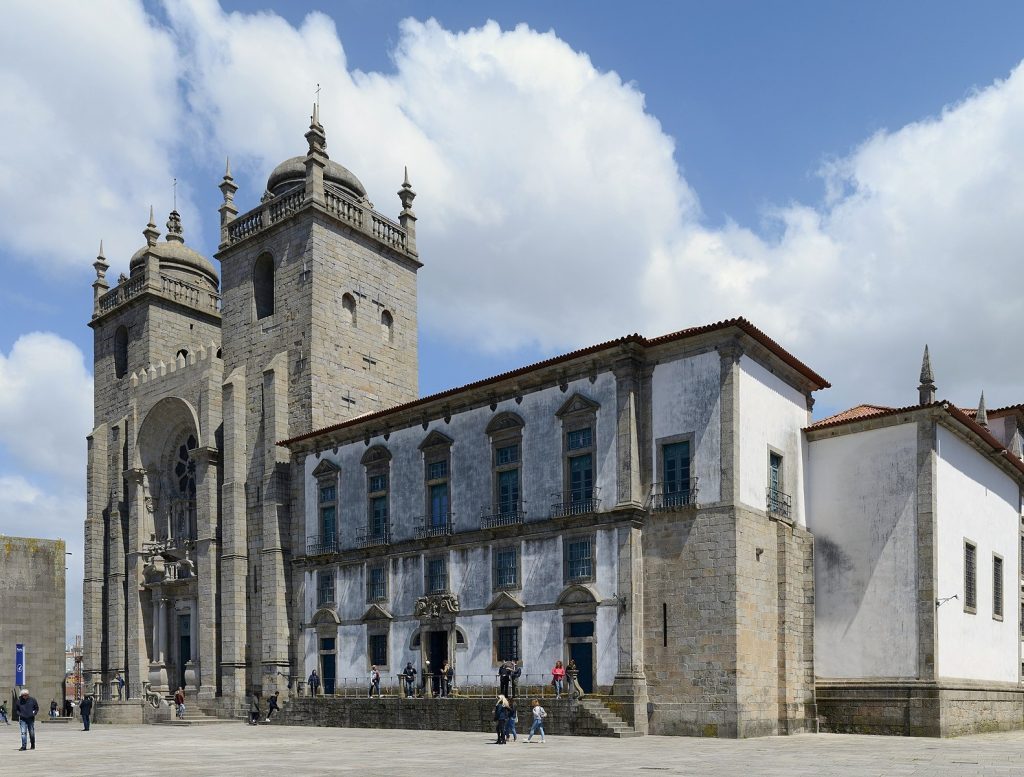
Porto Cathedral (Sé do Porto), also known as the Cathedral of the Assumption of Our Lady, is one of the city’s main landmarks, with centuries of history and architectural diversity. Located in the heart of Porto’s historic center, it’s one of the oldest and most important Romanesque buildings in Portugal.
Construction started in the early 12th century, around 1110, during the Romanesque period, and was completed centuries later in 1737. Over the years, the cathedral absorbed Gothic and Baroque elements and now has a layered architectural narrative that reflects the city’s history
Historical Significance
Porto’s history dates back to the 5th and 6th centuries when the bishopric was established. The site of the cathedral was already home to a pre-Romanesque church in 1147, as mentioned in the De Expugnatione Lyxbonensi.
One of the most important events in its history was the 1387 marriage of King John I of Portugal to Philippa of Lancaster, which sealed Portugal’s alliance with England. Over the centuries the cathedral has undergone several renovations, most notably in the 18th century when Nicolau Nasoni introduced Baroque elements, a new main portal and a loggia, enriching the building’s appearance.
Architectural Highlights
- Romanesque Structure: The original design features thick stone walls, fortress-like towers and narrow windows, as it was a place of worship and a defensive stronghold during times of war.
- Gothic Cloisters: Added in the 14th century, the cloisters have azulejo tiles with biblical scenes and house the cathedral museum with an impressive collection of religious art and artifacts.
- Baroque Additions: The 18th-century renovations brought ornate Baroque features, a new main altar and a rooftop balustrade by Nicolau Nasoni. These details contrast beautifully with the Romanesque structure.
- Rose Window: This medieval feature on the western façade is one of the best-preserved and the stained glass casts colorful light inside.
Visiting Tips
- Best Time to Visit: Get there early in the morning to avoid crowds and have unobstructed views.
- Opening Hours: Monday to Saturday, 9 AM to 6:30 PM. Closed on Sundays.
- Entrance Fee: €3. Free on the first Sunday of the month (but it may be busier on these days).
- Bonus Experience: After your visit walk to the nearby Dom Luís I Bridge for views of the cathedral and the Douro River from the other side.
Additional Recommendations
The Porto Cathedral offers far more than an architectural experience—it is a window into the city’s past. To fully appreciate its historical and cultural significance, consider joining a guided tour for deeper insights into its origins, transformations, and role in Portuguese history.
If you’d like, I can now create a condensed, SEO-optimized version of this Porto Cathedral section so it ranks better for search terms like Porto Cathedral opening hours, Sé do Porto history, and Porto Cathedral tickets. Would you like me to prepare that?
3. Church of São Francisco (Igreja de São Francisco)
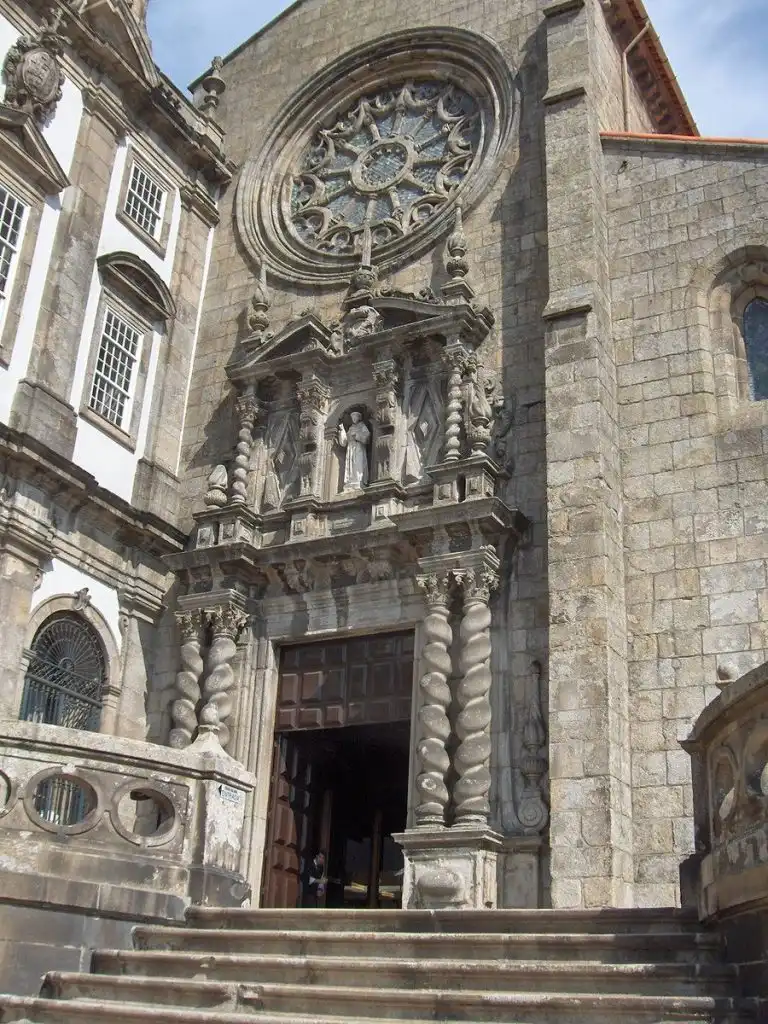
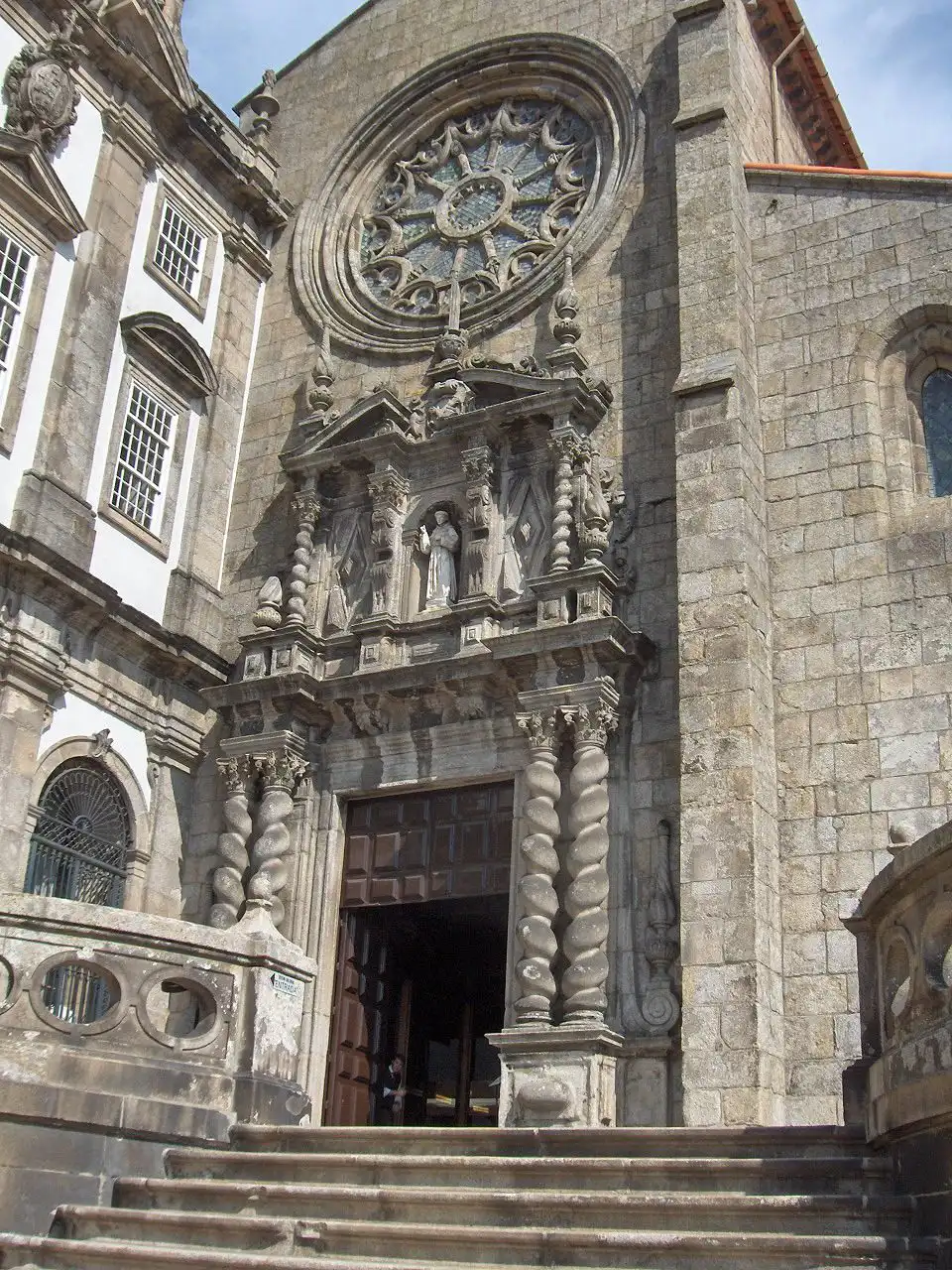
São Francisco Church is considered the most ornate church in Porto. Famous for its opulent interiors, intricate wood carvings and dramatic Baroque style, it’s one of the most beautiful churches in Portugal.
History of São Francisco Church
- Built in the 13th century by the Franciscan Order as a Gothic church.
- Completely transformed in the 17th and 18th centuries when it was decorated in the Baroque style. Over 400 kg of gold leaf were applied to its interiors during this period.
- The adjacent monastery was later used as the Stock Exchange Palace (Palácio da Bolsa).****
Architectural Highlights
- Golden Interiors: Almost every surface is covered in gold leaf, it’s one of the most luxurious religious buildings in Europe.
- Tree of Jesse: A beautifully carved wooden depiction of Jesus Christ’s genealogy, one of the church’s main attractions.****
- Gothic Rose Window: A preserved element from the original medieval structure, a glimpse into its Gothic past.
- Catacombs: Beneath the church lie the tombs of Franciscan monks and nobility, which can be visited.
Visiting Tips
- Best Time to Visit: Late afternoon when the sunlight enhances the warm glow of the gold-covered interiors.
- Opening Hours: Winter – 9 AM to 6 PM; Summer – 9 AM to 8 PM.****
- Entrance Fee: €7 which includes access to the church, museum and catacombs.
- Bonus Experience: Combine your visit with a tour of the nearby Palácio da Bolsa, part of the former monastery complex
4. Lapa Church (Igreja Paroquial de Nossa Senhora da Lapa)
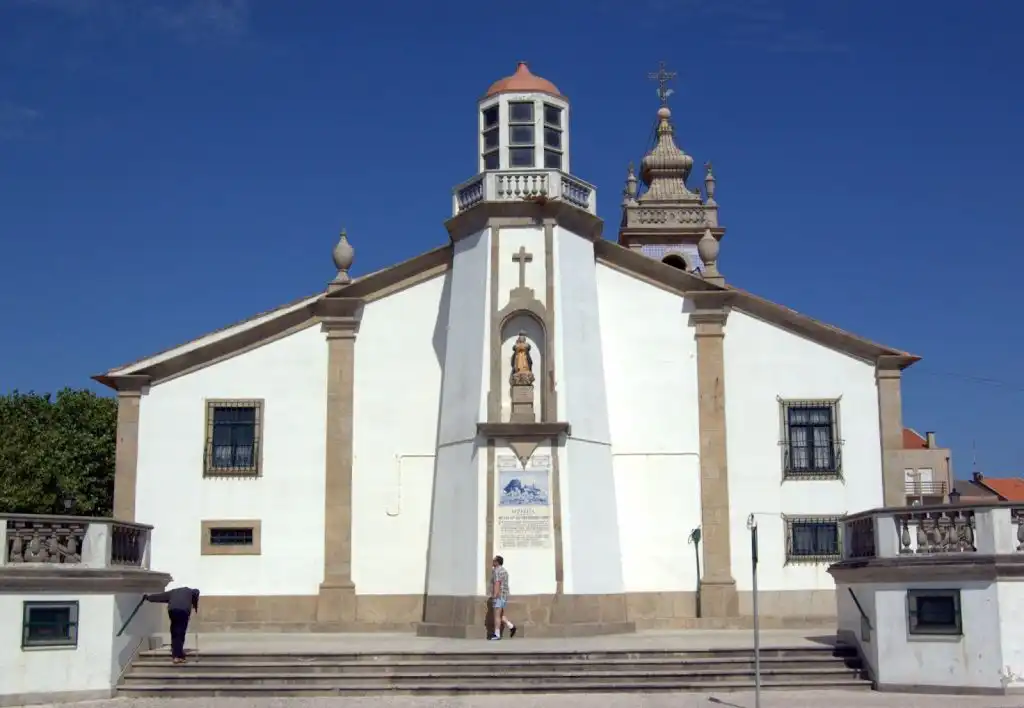
Lapa Church, officially the Parish Church of Our Lady of Lapa, is a historic and cultural landmark in Póvoa de Varzim, Portugal. Built in 1772 with the support of local fishermen and Spanish Franciscan missionaries it has been an important spiritual and community hub for centuries. Dedicated to Our Lady of the Rock (Nossa Senhora da Lapa) the church also played a key role in maritime safety, housing a lighthouse that guided fishermen back to shore.
History of Lapa Church
- Founded in 1770 by Spanish Franciscan missionaries with strong backing from the fishing community.
- Dedicated to Our Lady of the Rock and completed in 1772 with a blessing ceremony on August 15.
- Elevated in 1791 to the status of Royal Brotherhood of Our Lady of the Assumption (Real Irmandade de N. S. da Assunção) by Queen Maria I of Portugal.
- Its lighthouse was an essential navigation aid, helping local fishermen safely return from sea.
Architectural Highlights
- Seafront Location: Near the Atlantic coast, the church offers ocean views and a direct connection to the fishing community’s way of life.
- Historic Lighthouse: Once had two petrol-fueled lights, the lighthouse was a maritime guide for decades.
- Functional Design: Modest in appearance but with a dual role as a house of worship and navigation beacon it was deeply meaningful to the community.
- Local Symbols: Inside, you can see Siglas poveiras—unique marriage and family symbols tied to the region’s seafaring heritage.****
Visiting Tips
- Best Time to Visit: Early morning or late afternoon for a peaceful atmosphere and ocean views.****
- Entrance Fee: Free.
- Opening Hours: Generally open all day, but check locally for special events or changes in schedule.
- Bonus Experience: Walk around the harbor area nearby to soak up Póvoa de Varzim’s maritime culture.
How to Get There
Lapa Church is situated in Póvoa de Varzim’s coastal area, within walking distance from the harbor and the city center. Its location makes it an easy and rewarding stop for visitors interested in both local history and oceanfront scenery.
5. Church of the Carmelites and Carmo Church
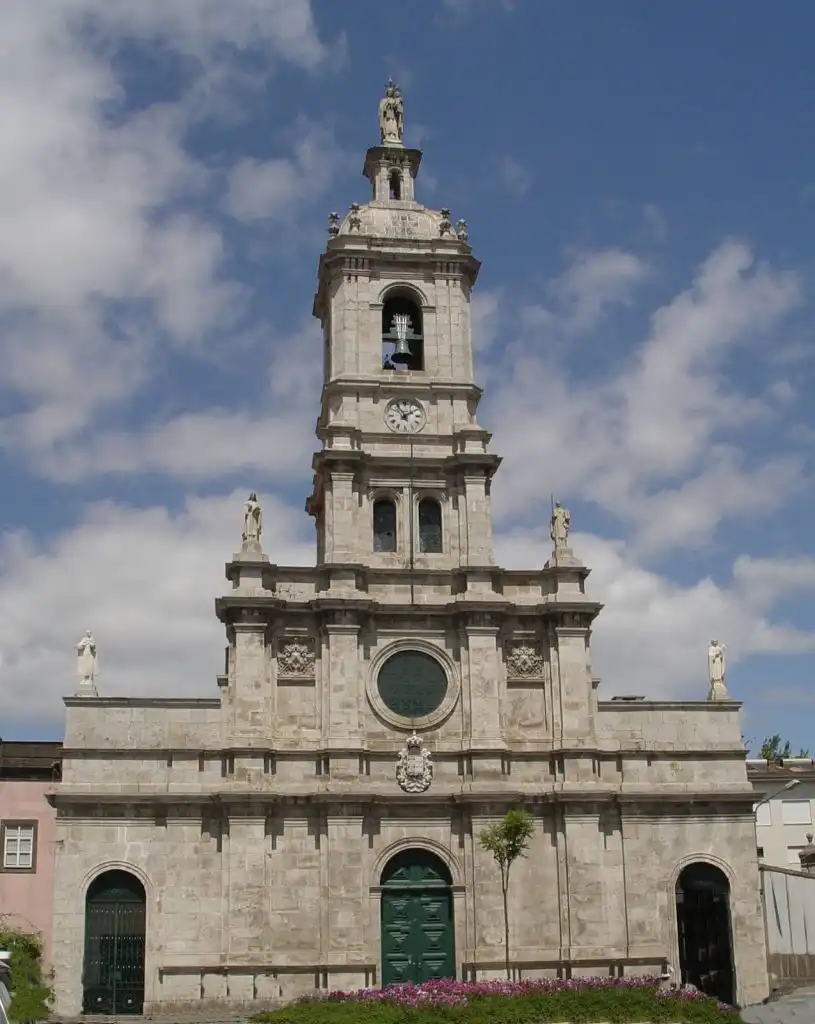
The Church of the Carmelites and Carmo Church are two of Porto’s most famous churches, side by side and often mentioned together due to their proximity and shared history. While each is from a different era, both are important symbols of the city’s religious and cultural heritage.
History and Architecture
- Church of the Carmelites – Built in the 17th century, this church is a Rococo masterpiece. Its highlight is the beautiful rococo altarpiece with intricate carvings and gilded details. The overall design is a reflection of the era’s love for ornamentation, with decorative elements throughout the interior.
- Carmo Church – Constructed in the 18th century, Carmo Church is a stunning example of Baroque architecture. Its curves, proportions and grandeur are typical of the style, while its façade is one of Porto’s architectural gems. The church is connected to the Church of the Carmelites by a narrow building—often referred to as one of the narrowest in Porto—adding a touch of charm and history to the site.
Although these two churches were built a century apart, they have strong historical and religious ties. Their location is also the meeting point of Porto’s nightlife district and the stylish Cedofeita neighborhood, making them part of the city’s urban fabric.
Key Highlights
- Rococo Altarpiece in the Church of the Carmelites, with exceptional craftsmanship.
- Baroque Grandeur of Carmo Church, dramatic architecture, and interior details.
- The Narrow House connecting the two churches, an architectural curiosity.
- Prime Location at the crossroads of Porto’s entertainment district and Cedofeita.
Visiting Information
- Church of the Carmelites – Free. Open Monday to Saturday, 10:00 AM to 12:00 PM, and 4:00 PM to 5:20 PM (not posted at the entrance). Closes at 6:00 PM. Carmo Church – €5. Open daily from 9:30 AM to 6:00 PM (April–October) and 9:30 AM to 5:00 PM (November–March). The ticket includes access to multiple areas, including the Hidden House, Sacristy, Catacombs, Relics, Gallery of Crucifixes, Noble Hall, Hall of Paraments, Hall of Kings, Library, and rooftop with city views.
How to Get There
Both churches are a 10-minute walk from Aliados and São Bento metro stations, with several bus routes stopping nearby.
Why Visit
For architecture lovers, these two churches offer a great contrast between Rococo and Baroque styles. They are in the city center so a great stop during a walking tour of Porto and the rooftop views from Carmo Church are one of the best in the city. For history, art or views, they are a must see in any Porto itinerary.
6. Chapel of the Souls (Capela das Almas)
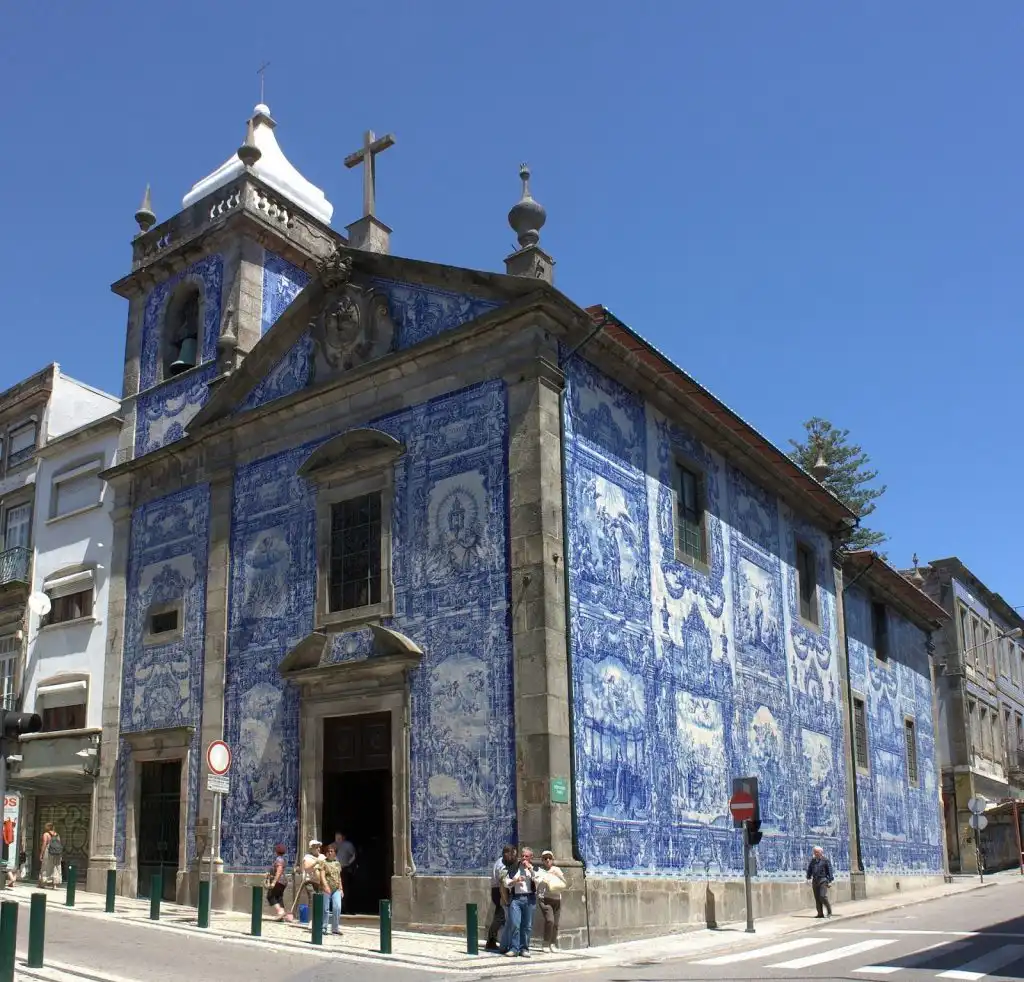
The Chapel of the Souls (Capela das Almas) is one of Porto’s most famous landmarks, famous for its beautiful façade covered in traditional Portuguese azulejos (decorative tiles). Built in the late 18th century, it has become a popular stop for visitors from all over the world, mainly due to its blue-and-white tilework. It’s one of the most photographed churches in Porto and is admired for its beauty and craftsmanship.
History and Architecture
Although the chapel has been around for centuries, it gained international attention in 1929 when its exterior was covered in 15,947 tiles. These azulejos depict scenes from the life of Saint Francis of Assisi and Saint Catherine of Alexandria, the patron saints of the chapel. The detailed artwork tells the story of their lives, showcasing the skill and artistry of Portuguese tile-making.
Inside the chapel is more subdued, allowing the exterior to be the star. It’s the façade that attracts photographers, art lovers and architecture enthusiasts.
Key Highlights
- Azulejo Masterpiece – The façade is entirely covered in thousands of hand-painted tiles, making it an important site for anyone interested in Portuguese ceramic art.
- Religious Storytelling – The tile panels vividly illustrate episodes from the lives of Saint Francis and Saint Catherine of Alexandria.
- Photographer’s Favorite – Its unique design and vivid blue patterns have made it one of the most captured landmarks in Porto.
Visiting Information
- Entry – Free of charge.
- Opening Hours –
- Weekdays: 7:30 AM – 6:00 PM
- Weekends: 7:30 AM – 12:30 PM and 6:30 PM – 7:30 PM
- Weekdays: 7:30 AM – 6:00 PM
- Location – Situated directly across from Bolhão metro station, making it easily accessible.
Why Visit
The Chapel of the Souls is a must-see for anyone with an interest in Portuguese culture, tile art, and religious history. Its combination of artistry, heritage, and accessibility makes it a perfect stop for sightseeing in Porto. Its central position on Rua de Santa Catarina also means it’s just a short 5–10 minute walk from Canto de Luz, a boutique hotel ideal for visitors wanting to stay close to the city’s main attractions.
7. Igreja de São José das Taipas:
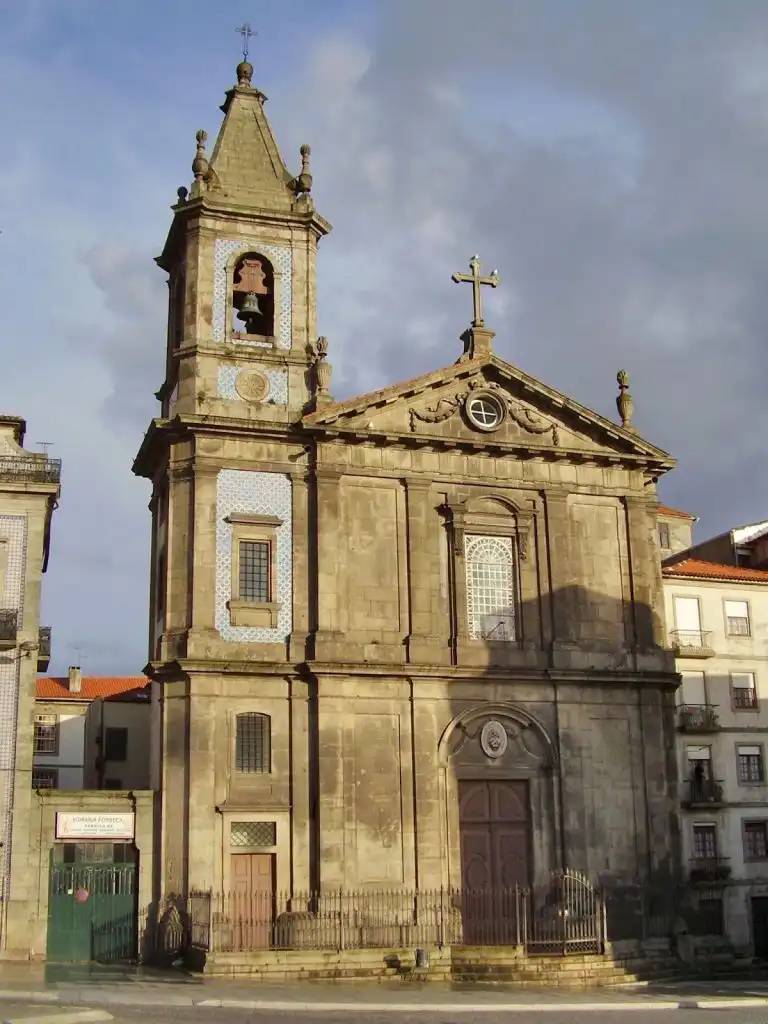
The Igreja de São José das Taipas was constructed in the late 18th century and originally formed part of a convent for the Brothers of Saint Joseph. Its name, “Taipas,” refers to the traditional flooring once common in the area, symbolizing both the church’s humble beginnings and its close ties to the local community. Over the years, it has become a meaningful place of worship and reflection for Porto’s residents. While historically significant, it remains relatively undiscovered by tourists, offering a peaceful alternative to the city’s busier religious landmarks.
Architectural Features
- Baroque Design – A fine example of Baroque architecture, the church is adorned with intricate detailing and dramatic decorative elements.
- Gilded Main Altar – Reflecting the opulence of the period, the richly gilded altar is a highlight for visitors.
- Intricate Woodwork – Delicate wooden carvings embellish the altars and chapels, showcasing skilled craftsmanship.
- Stucco Ornamentation – Elegant stucco designs add refinement to the church’s interior.
- Vaulted Ceiling – The soaring vaulted ceiling enhances the sense of grandeur inside.
- Intimate Ambience – Despite its ornate Baroque style, the church retains a warm and inviting atmosphere, complemented by wooden pews and marble floors.
Why Visit
- A Hidden Gem – Less frequented by tourists, it offers a calm, uncrowded setting for quiet reflection.
- Historical Insight – Provides a glimpse into Porto’s religious history and the influence of the Brothers of Saint Joseph.
- Architectural Appeal – A place to admire Baroque artistry, gilded altars, and fine carvings in an intimate environment.
- Peaceful Escape – Ideal for those wishing to step away from the hustle of the city and enjoy a serene setting.
Things to Do in Porto After Visiting the Church
Once you’ve explored Porto’s remarkable churches, the city offers plenty more to discover. Whether you wish to dive deeper into its history, enjoy local flavors, or simply take in the sights, Porto is full of memorable experiences.
- Stroll through the historic Ribeira District
- Visit the iconic Livraria Lello bookstore
- Tour the Palácio da Bolsa (Stock Exchange Palace)
- Try Porto’s famous Francesinha sandwich
- Relax in the Crystal Palace Gardens (Jardins do Palácio de Cristal)
- Enjoy a Port wine tasting and learn about the city’s wine heritage
- Admire the tiled beauty of São Bento Railway Station
- Browse fresh produce and local goods at Mercado do Bolhão
- Sip coffee in the historic Café Majestic
- Take in panoramic views from the Dom Luís I Bridge
- Explore art and nature at the Serralves Museum and Park
Unique Activities to Try in Porto
If you want to add a distinctive twist to your Porto itinerary, here are some memorable and enriching activities to explore after discovering the city’s historic landmarks:
Chef Led Market Tour & Portuguese Tapas Class with Wine
Overview
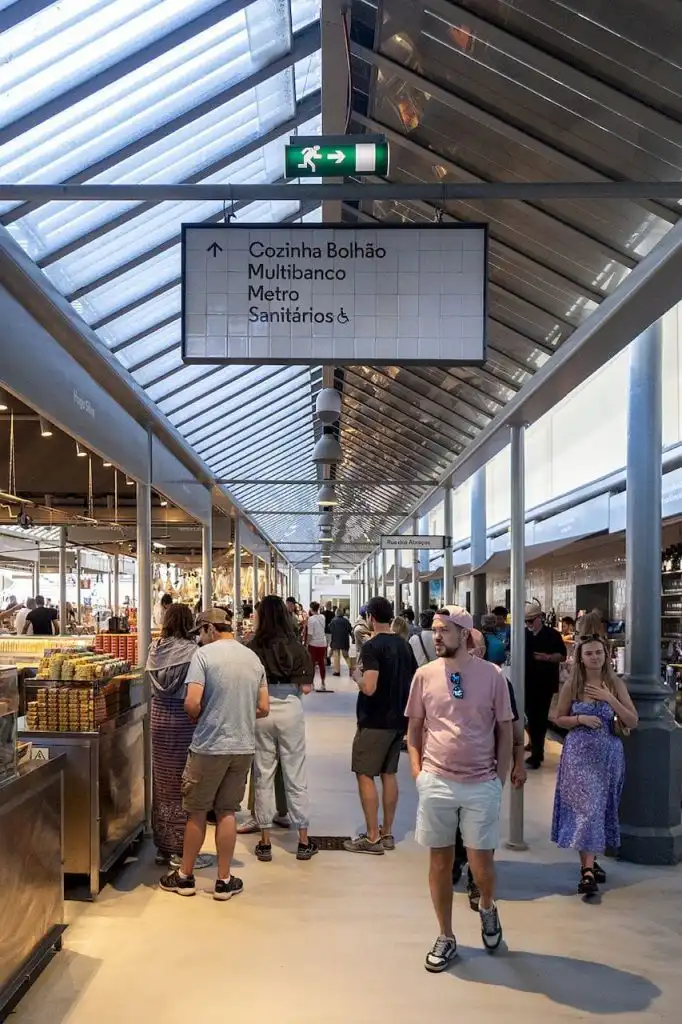
Experience the flavors of Porto with a Chef-Led Market Tour and Portuguese Tapas Class with Wine, starting with a guided visit to the renowned Mercado de Bolhão. Here, you’ll select the freshest local ingredients before heading to the kitchen at Boutique Maison Canto De Luz. Upon arrival, enjoy a freshly brewed coffee and a traditional Portuguese Nata pastry before beginning your hands-on cooking workshop.
Under the guidance of a skilled chef, you’ll prepare a selection of authentic Portuguese tapas (or “tapiscos”). After cooking, sit down with fellow participants to enjoy your creations, perfectly paired with a glass of Douro Valley wine. Before leaving, you’ll receive a goodie bag containing the recipes and a travel-friendly bottle of Aguardente for flame-grilling chorizo—allowing you to recreate the Porto experience at home.
Sample Menu
- Flame-Grilled Chorizo
- Fresh Clams in White Wine and Lemon Sauce
- Codfish Pancakes
- Vegetarian and Vegan Dishes
- Traditional Portuguese Coffee and Dulce de Leche Dessert
What’s Included
- Hands-on cooking workshop
- Guided market tour
- Barista coffee
- Lunch (prepared during the class) with a glass of Douro wine
What’s Not Included
- Menu substitutions
- Gratuities
- Pickup and drop-off (available as an optional add-on)
Meeting Point
Corner between Manteigaria and Leitaria Quinta do Paço – the chef will be wearing a chef’s hat.
Best Hotel to Stay in Porto
For a Distinctive and Luxurious Stay in Porto
Canto de Luz is a boutique hotel tucked away in the heart of Porto’s old town, offering an exceptional blend of French hospitality, Portuguese charm, and highly personalized service. Its prime location makes it the ideal base for exploring the city, with landmarks like the Luís I Bridge, São Bento Station, and the Ribeira just a short walk away. For more options, you can also explore our guide to the Top 8 Hotels in Porto to Stay: Best Accommodations for Your Visit.
Why Choose Canto de Luz for Your Porto Stay
- Prime Location: Steps from Porto’s most iconic attractions.
- Varied Accommodation: From elegant Maison Suites with garden views to the exclusive Villa Almada with its own pool.
- Gastronomic Excellence: Enjoy the renowned homemade breakfast, join culinary tours, take part in cooking classes, or savor wine tastings at the in-house culinary school, Canto Cooking.
- Relaxation Spaces: Heated outdoor saltwater pool and tranquil private gardens.
- Luxury Meets Comfort: Thoughtfully designed interiors, attentive service, and a serene atmosphere for a truly boutique experience.
A Unique Boutique Experience
Following an extensive five-year restoration, Canto de Luz opened in 2021, showcasing a refined blend of French design and Portuguese elegance. The addition of Villa Almada and the Duplex Garden Villas has elevated the property’s offering, providing private patios, spacious living spaces, and exclusive privacy for discerning travelers.
Accommodation Highlights
- Maison Suites: City View or Garden Balcony, perfect for couples.
- Studio Apartments: Urban Retreat or City Retreat with kitchenettes and laundry facilities.
- Duplex Garden Villas: One-bedroom, fully equipped for a luxurious private escape.
- Villa Almada: Two-bedroom villa with private pool, ideal for exclusivity and comfort.
- Exclusive Rental: Book the entire Maison for groups, events, or family gatherings.
Gastronomy & Wine at Canto de Luz
- Legendary Homemade Breakfast: Fresh, locally sourced ingredients from Mercado de Bolhão, served daily.
- Canto Cooking Experiences: Guided market tours, hands-on cooking workshops, and daily wine and port tastings with tapas.
- In-House Wine Machine: Discover Douro Valley wines, perfectly paired with small plates.
Whether your focus is Porto’s food, wine, history, or simply unwinding in style, Canto de Luz offers a seamless combination of comfort, elegance, and warm hospitality—making it a perfect choice for creating lasting memories in the city.